






What's Happening?
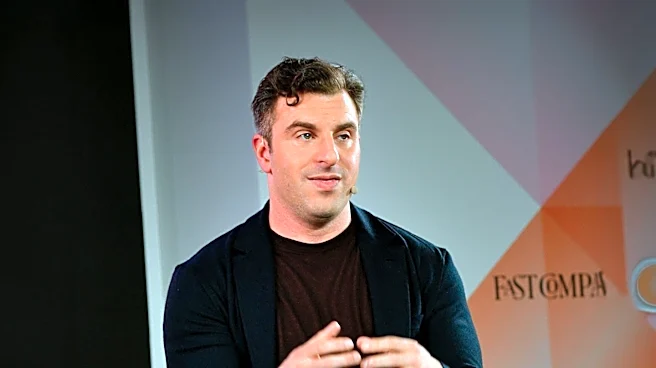
Brian Chesky, co-founder and CEO of Airbnb, is evolving his distinctive 'Founder Mode' management philosophy to align with the artificial intelligence era. This approach, which emphasizes deep founder involvement in business details, is now being applied
to Airbnb's engineering organization. Chesky has stated that engineers at Airbnb are no longer primarily writing code. Instead, AI-powered coding assistants and advanced development tools are taking over software generation, error identification, and repetitive tasks. This shift allows engineers to focus on higher-level responsibilities such as designing systems, evaluating AI-generated work, solving complex problems, and enhancing the overall customer experience. The company views this transformation not merely as a cost-saving measure but as an opportunity to fundamentally rethink organizational operations by dramatically increasing individual productivity and allowing founders to remain closer to product development.
Why It's Important?
This strategic shift at Airbnb signifies a profound transformation in the role of software engineers within technology companies, reflecting a broader industry trend driven by AI. By re-tasking engineers from direct coding to more strategic roles, Airbnb aims to leverage human expertise more effectively, focusing on critical thinking, system architecture, and user experience. This could lead to faster product development cycles, more innovative solutions, and a more efficient allocation of human capital. For the U.S. tech industry, this model suggests a future where AI augments human capabilities rather than simply replacing jobs, potentially redefining skill sets required for tech professionals. It also highlights the importance of continuous learning and adaptation for engineers, who will need to evolve from coders to AI orchestrators and system designers. This approach could also influence how other companies structure their engineering teams and integrate AI into their development processes.
What's Next?
As Airbnb continues to implement this AI-driven engineering model, other technology companies may observe its effectiveness and consider similar transformations. This could lead to a widespread redefinition of engineering roles across the U.S. tech sector, with a greater emphasis on AI proficiency, system design, and problem-solving skills. Companies will likely invest more in training programs to upskill their existing engineering workforce for these new responsibilities. Challenges may arise in ensuring the quality and security of AI-generated code, necessitating new validation and oversight processes. The long-term impact could include a more streamlined and efficient software development industry, but also a potential shift in the demand for certain types of engineering talent. This evolution will likely foster new tools and methodologies for AI-assisted development, further integrating AI into the core of software creation.
Beyond the Headlines
The shift in Airbnb's engineering philosophy raises deeper questions about the future of work, particularly in highly skilled technical fields. While Chesky emphasizes augmenting human potential, the widespread adoption of AI in coding could eventually lead to a re-evaluation of workforce needs and educational pathways for aspiring engineers. It highlights the ethical considerations of AI's role in creative and technical tasks, pushing the boundaries of human-machine collaboration. This model could also foster a more integrated approach to product development, where design, engineering, and customer experience teams work more cohesively, driven by AI's ability to rapidly prototype and iterate. Ultimately, Airbnb's experiment could serve as a blueprint for how companies can harness AI to not just automate tasks, but to fundamentally restructure their operational models, fostering greater innovation and efficiency while redefining the human element in technological creation.