



What's Happening?
General Motors (GM) is extensively utilizing simulation technology at its Global Technical Center in Warren, Michigan, to develop advanced driver assistance systems (ADAS) that will enable 'eyes-off' driving. Hundreds of volunteer drivers participate
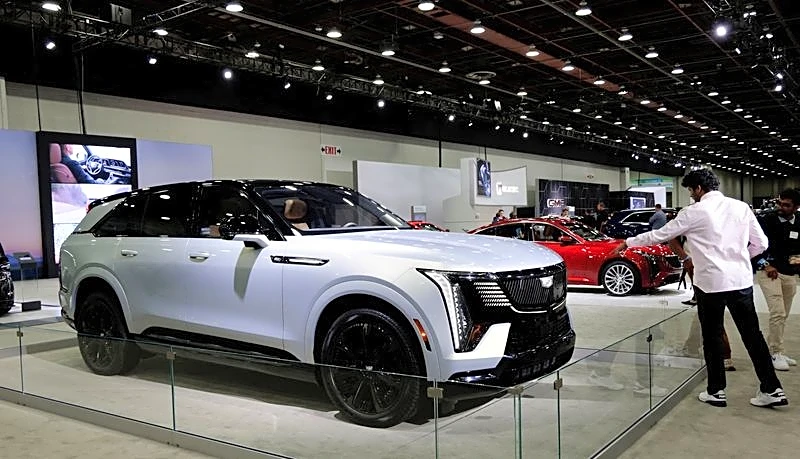
in a 360-degree immersive simulator, experiencing various real-world driving scenarios such as construction, rain, and traffic. During these simulations, GM measures drivers' physiological responses, including eye movements, heart rate, and stress levels, alongside testing the vehicle's technology. This approach allows GM to refine its ADAS, which currently offers 'hands-free' capabilities like automatic emergency braking and lane-centering assist. The automaker aims to launch its next-generation Super Cruise system, allowing for safe 'eyes-off' driving, by 2028, starting with the Cadillac Escalade IQ luxury electric SUV. This development is part of a broader industry trend where automakers are racing to introduce more advanced autonomous features, recognizing the significant market potential and subscription revenue from such capabilities.
Why It's Important?
The shift from 'hands-free' to 'eyes-off' driving represents a significant leap in automotive technology, promising to redefine the driving experience and create new revenue streams for manufacturers. As noted by Sam Abuelsamid, vice president of market research at Telemetry, 'eyes-off' capability is a crucial turning point that will make consumers more willing to pay for these features, as it genuinely gives drivers back time by freeing them from constant road attention. This advancement could lead to increased adoption of subscription-based services for autonomous features, making automated driving a lucrative sector for the auto industry. The technology also aims to enhance road safety by reducing human error, although regulatory frameworks are still evolving. The competitive race among automakers like GM, Ford (with BlueCruise), and Tesla (with 'Full Self-Driving' requiring oversight) highlights the industry's commitment to this future, with the potential to transform daily commutes and long-distance travel across the U.S.
What's Next?
GM plans to launch its 'eyes-off' Super Cruise system by 2028, initially on the Cadillac Escalade IQ, with other automakers also targeting similar timelines for advanced highway-speed systems. The widespread adoption of these technologies will depend on continued technological advancements, robust safety validation through extensive simulation and real-world testing, and the development of clear regulatory guidelines. Currently, there is limited federal regulation governing these systems, requiring automakers to seek state-by-state approvals, which could influence where and how quickly these 'eyes-off' systems are deployed. The industry also anticipates that these advanced features will drive significant subscription revenue, prompting further investment in research and development. Future developments will likely focus on expanding the operational design domain of these systems to a wider variety of roads and conditions, moving beyond current highway-only limitations.
Beyond the Headlines
The pursuit of 'eyes-off' autonomous driving raises profound ethical, legal, and societal questions. Ethically, it shifts the responsibility for vehicle operation more heavily onto the manufacturer and the AI system, prompting debates about accountability in the event of accidents. Legally, the lack of comprehensive federal regulations creates a patchwork of state-level rules, potentially complicating nationwide deployment and consumer understanding of system limitations. Societally, the ability for drivers to engage in other activities while driving could alter commuting habits, productivity, and even urban planning. The technology also highlights the increasing reliance on artificial intelligence and data collection, with implications for privacy and cybersecurity. As these systems become more sophisticated, the long-term impact on human driving skills, the automotive workforce, and the very concept of vehicle ownership will continue to evolve, pushing the boundaries of human-machine interaction.