

What's Happening?
The Women's National Basketball Association (WNBA), currently in its 30th season, has no Black women serving as head coaches for any of its teams. This absence is becoming increasingly prominent as the league plans to expand to 18 teams by 2030. The WNBA's
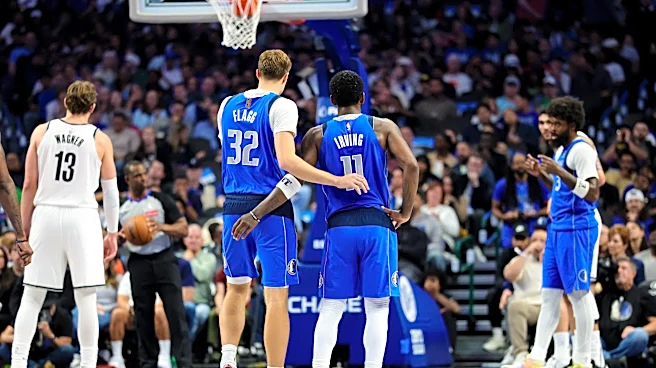
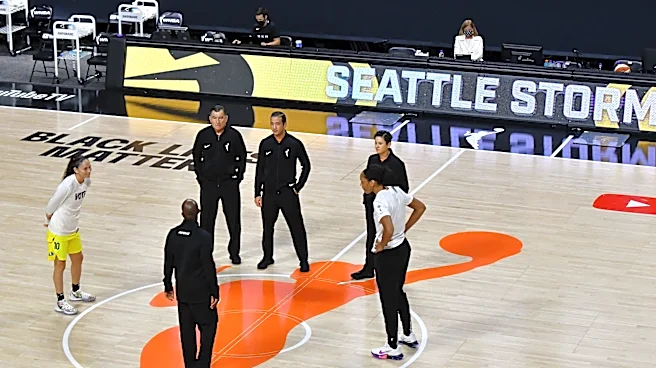
player base is predominantly composed of Black women, making the lack of representation in head coaching roles a significant point of discussion. NBA player Kyrie Irving has publicly highlighted this disparity, advocating for more Black female head coaches in the WNBA. Historically, the WNBA has had Black women head coaches, with over half of its head coaches being Black in 2022, including three Black women. However, this number has since declined, with Noelle Quinn being the sole Black woman head coach in the 2025 WNBA season for the Seattle Storm. Other leagues, such as Unrivaled and the NCAA, have seen a greater presence of Black women in head coaching positions.
Why It's Important?
The absence of Black women in WNBA head coaching roles carries significant implications for diversity, equity, and representation within professional sports. Given that Black women constitute a majority of the league's players, their underrepresentation in leadership positions suggests a potential disconnect between the league's on-court demographics and its coaching staff. This situation could impact player development, mentorship opportunities, and the overall cultural environment of the league. It also raises questions about equal opportunity and access to leadership roles for qualified Black women in basketball. The WNBA's planned expansion to 18 teams by 2030 presents a critical opportunity to address this imbalance and intentionally foster a more inclusive coaching landscape. Failure to do so could lead to continued criticism and potentially affect the league's public image and its commitment to diversity.
What's Next?
As the WNBA moves towards its expansion to 18 teams by 2030, there will likely be increased pressure on the league to address the lack of Black women head coaches. This expansion will create new coaching opportunities, and stakeholders, including players and advocates, will be watching to see if these positions are filled with a more diverse pool of candidates. The public statements from figures like Kyrie Irving indicate a growing demand for change, which could prompt the league to re-evaluate its hiring practices and talent pipelines for coaching roles. Discussions around implementing parameters similar to those seen in the NBA, which has a higher representation of African-American head coaches, may also emerge. The WNBA's response to this issue will be crucial in shaping its future and its commitment to equitable representation.
Beyond the Headlines
The issue extends beyond mere statistics, touching upon deeper societal and systemic challenges related to race and gender in leadership. The WNBA, often lauded for its progressive stance on social issues, faces a challenge to align its internal practices with its external messaging. The lack of Black women in head coaching roles, despite a rich history of influential Black women leaders in basketball like C. Vivian Stringer, Carolyn Peck, and Dawn Staley, highlights potential barriers to advancement. This situation could reflect broader biases in hiring processes or a lack of intentional pathways for Black women to transition into head coaching roles. Addressing this will require not just filling positions, but also fostering a culture that actively supports and promotes diverse leadership, ensuring that the league truly reflects the talent and diversity of its players.