



What's Happening?
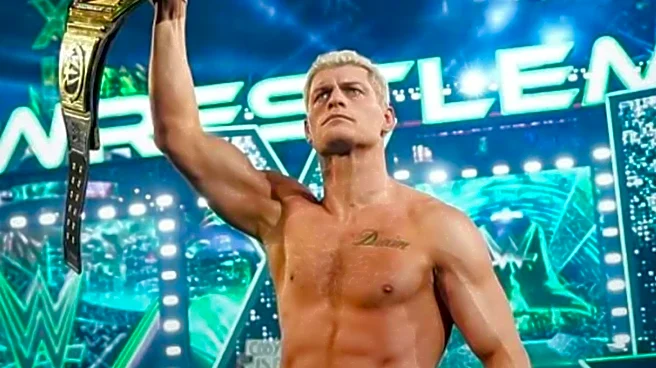
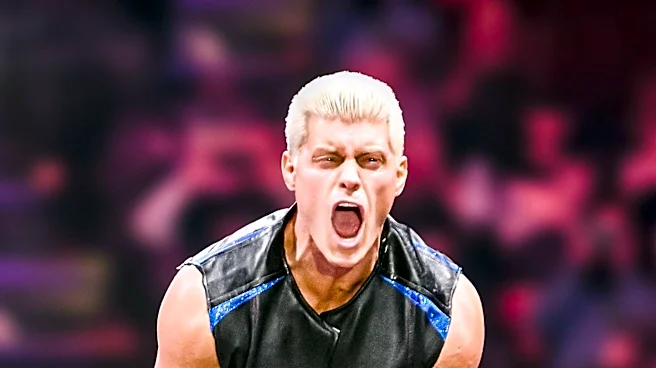
WWE Hall of Famer Eric Bischoff has voiced his concern that WWE star Cody Rhodes' frequent podcast appearances are negatively impacting his image. During an episode of his '83 Weeks' podcast, Bischoff stated that he dislikes seeing Rhodes in the role
of an interviewer, believing that a star of Rhodes' caliber should be the one being interviewed, not conducting interviews. Bischoff, agreeing with his co-host Conrad Thompson, argued that while Rhodes might be good at it, such exposure 'dulls the luster' of his persona and achievements. He drew a parallel to Vince McMahon's past philosophy of star-making, suggesting that overexposing Rhodes through podcasts goes against the principle of maintaining a star's mystique. Bischoff further criticized the 'WWE Unreal' series for contributing to this issue, asserting that these aggregated exposures make superstars seem more like 'people' rather than aspirational 'stars' that audiences pay to see.
Why It's Important?
This critique from a veteran like Eric Bischoff highlights a significant debate within the professional wrestling industry regarding star presentation and the balance between accessibility and mystique. In an era dominated by social media and direct fan engagement, the traditional model of carefully curated superstar personas is being challenged. Bischoff's perspective represents an older school of thought where scarcity of access contributed to a performer's larger-than-life image. If his view gains traction, it could influence how WWE and other wrestling promotions manage their top talent's media appearances, potentially leading to stricter controls over podcast and behind-the-scenes content. For Cody Rhodes, this commentary could prompt a reevaluation of his media strategy, balancing his desire for personal expression and fan connection with the need to maintain his 'American Nightmare' persona. The broader impact could be a shift in how wrestling promotions cultivate and protect the 'star power' of their athletes in an increasingly transparent media landscape.
What's Next?
It remains to be seen whether Eric Bischoff's comments will influence Cody Rhodes' future podcast engagements or WWE's overall strategy for its talent's media presence. Rhodes may choose to address Bischoff's critique directly, either on his own podcast or in other interviews, offering his perspective on fan engagement and personal branding. WWE, as a company, might consider internal discussions about the optimal level of media exposure for its top stars to ensure their marketability and mystique are preserved. This could lead to new guidelines or a more curated approach to how wrestlers participate in podcasts and behind-the-scenes content. The ongoing tension between traditional star-making principles and modern media accessibility will likely continue to be a topic of discussion among wrestling personalities, fans, and industry executives, shaping the future of how wrestling stars interact with their audience.
Beyond the Headlines
Beyond the immediate implications for Cody Rhodes and WWE, Bischoff's comments touch upon a fundamental shift in celebrity culture. The digital age has fostered an expectation of constant access and authenticity from public figures, often at odds with the manufactured mystique that once defined stardom. This tension is particularly acute in professional wrestling, where characters are meticulously crafted, yet fans increasingly demand to see the 'real' person behind the persona. The debate raises ethical questions about the responsibility of performers to maintain their on-screen characters versus their right to personal expression. It also highlights the economic implications of this shift: does increased accessibility lead to greater fan loyalty and merchandise sales, or does it dilute the premium value of a star's image? This ongoing negotiation between public persona and private individual, amplified by digital platforms, will continue to shape the careers of entertainers across all industries.