




What's Happening?
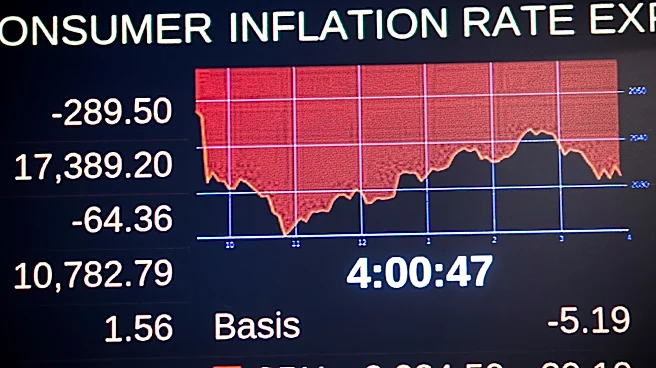
Generali, a major insurer, has indicated that core PCE inflation in the U.S. remains above 3%, leading them to anticipate further interest rate increases by the Federal Reserve. Generali expects the Fed to raise rates by an additional 25 basis points
in December and again in the first quarter of 2027. This outlook contributes to a broader expectation among U.S. insurers and investors of a "higher-for-longer" interest rate environment. While this scenario supports investment income across the insurance industry, it simultaneously places additional pressure on borrowers and leveraged businesses. Generali's assessment also highlights the U.S. economy's robustness compared to Europe, attributing its strength to resilient consumption and strong capital spending, particularly in technology. However, the scale and financing of AI-related investments are noted as areas of increasing scrutiny.
Why It's Important?
Generali's forecast of continued Federal Reserve rate hikes has significant implications for the U.S. economy and financial markets. A "higher-for-longer" interest rate environment means increased borrowing costs for consumers and businesses, potentially dampening economic growth and investment. For the insurance industry, while higher rates can boost investment income, they also pose challenges for certain sectors, such as contractors and private credit borrowers, as warned by Willis Re. The scrutiny on AI-related investments suggests that while technology drives economic resilience, its financing and scale could introduce new risks or complexities that policymakers and financial institutions need to address. This outlook underscores the delicate balance the Fed must maintain between controlling inflation and supporting economic expansion, impacting everything from mortgage rates to corporate lending and overall market sentiment.
What's Next?
The anticipated rate hikes by the Federal Reserve in December and early 2027, as projected by Generali, suggest a continued period of monetary tightening. Businesses and consumers should prepare for potentially higher borrowing costs and a more constrained credit environment. The insurance sector will likely continue to benefit from increased investment income, but will also need to manage risks associated with leveraged businesses and specific financing concerns like data centers. The ongoing scrutiny of AI-related investments indicates that this area will be a key focus for economic analysis and policy discussions, potentially influencing future regulatory frameworks or investment strategies. All eyes will be on upcoming Federal Reserve meetings and economic data releases for confirmation of these anticipated policy moves.
Beyond the Headlines
The sustained strength of the U.S. economy, particularly in technology and consumption, despite persistent inflation and anticipated rate hikes, points to a unique economic resilience. This resilience, however, is not without its complexities, as evidenced by the increasing scrutiny on the scale and financing of AI-related investments. This suggests a potential for new forms of systemic risk or market imbalances emerging from rapid technological advancement. The interplay between robust economic activity, inflationary pressures, and the Fed's response could lead to a re-evaluation of traditional economic indicators and policy tools. Furthermore, the "higher-for-longer" rate environment could accelerate shifts in capital allocation, favoring less leveraged sectors and potentially reshaping the competitive landscape across various U.S. industries.