








What's Happening?
Ayurveda, an ancient Indian system of medicine, approaches immune health not by 'boosting' immunity, but by focusing on balance, efficient digestion, and sustained energy to bolster the body's natural defenses. Key Ayurvedic concepts for immunity include
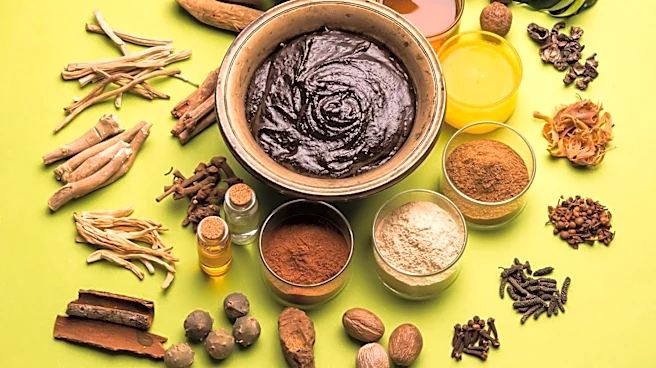
'ojas,' the body's vital essence, which, when strong, is believed to aid recovery from stress and illness. Another crucial concept is 'agni,' or digestive fire; Ayurveda posits that robust digestion is fundamental to health, and a weak agni can lead to 'ama,' undigested waste linked to reduced ojas. The 'rasayana' branch of Ayurveda focuses on rejuvenation through specific herbs, foods, and daily practices. Common rasayana herbs include amla, guduchi, and ashwagandha. While these traditional ideas, such as ojas and agni, lack direct modern scientific measurements, they offer a distinct perspective on wellness. Modern science is currently investigating the efficacy of these herbs in improving human immune function. Quality of Ayurvedic supplements is emphasized, with initiatives like AyBo, an offshoot of the California College of Ayurveda, producing herbal supplements in the U.S. and offering consultations.
Why It's Important?
This Ayurvedic perspective offers an alternative or complementary approach to conventional Western medicine's focus on immune 'boosting.' By emphasizing holistic balance, digestion, and energy, Ayurveda highlights lifestyle factors that are increasingly recognized in modern wellness, such as the importance of gut health and stress management for overall well-being. The integration of traditional practices and herbal supplements, if scientifically validated, could expand the toolkit for maintaining health and resilience in the U.S. The emphasis on quality control for Ayurvedic products, as seen with U.S.-based initiatives like AyBo, is crucial for consumer safety and trust, especially as interest in alternative medicine grows. For individuals seeking natural health solutions, understanding these principles can inform choices about diet, lifestyle, and supplement use, potentially leading to improved general health and reduced susceptibility to illness. However, the ongoing need for rigorous clinical trials to substantiate the immune-modulating claims of Ayurvedic herbs underscores the importance of evidence-based decision-making in healthcare.
What's Next?
The ongoing scientific testing of Ayurvedic herbs for their immune-modulating effects in humans will be critical in determining their broader acceptance and integration into mainstream health practices. As research progresses, there may be clearer guidelines on the specific benefits and safe usage of herbs like amla, guduchi, and ashwagandha. Consumers interested in Ayurvedic supplements will likely continue to seek out quality products, and the role of initiatives like AyBo in providing transparent information and consultations will become more significant. Healthcare professionals may increasingly need to be informed about Ayurvedic principles to guide patients who are exploring these traditional remedies. Furthermore, the emphasis on personalized approaches based on an individual's 'dosha' suggests a future where tailored wellness plans, potentially combining traditional and modern insights, could become more prevalent. The dialogue between traditional Ayurvedic wisdom and modern scientific inquiry is expected to continue, potentially leading to new understandings of immune health.
Beyond the Headlines
The Ayurvedic approach to immunity, centered on balance and internal harmony rather than aggressive 'boosting,' reflects a deeper philosophical understanding of health that contrasts with some Western medical paradigms. This perspective encourages a proactive, preventative lifestyle that integrates diet, stress reduction, and natural remedies, fostering a sense of personal agency in health management. The concept of 'ojas' as a vital essence and 'agni' as digestive fire speaks to an interconnectedness within the body, where physical and mental well-being are intrinsically linked. This holistic view can influence how individuals perceive and manage their health, moving beyond symptomatic treatment to address root causes. The growing interest in Ayurveda in the U.S. also highlights a cultural shift towards embracing diverse healing traditions and a desire for more personalized and natural health solutions. This trend could lead to a broader re-evaluation of wellness practices, encouraging a more integrated approach that values both ancient wisdom and modern scientific advancements.