


What's Happening?
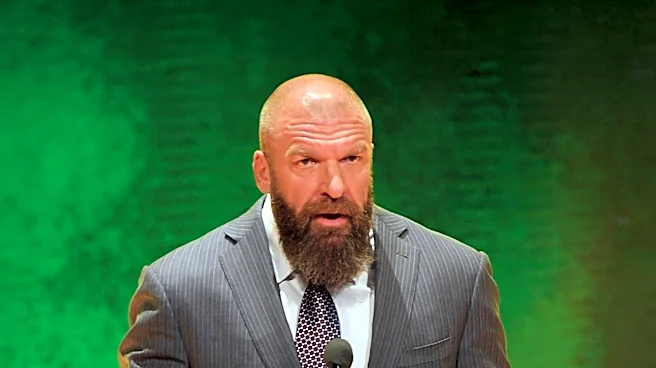
WWE President Nick Khan has publicly lauded Paul Levesque, known as Triple H, as the premier creative mind in the wrestling industry. During an appearance on 'The Varsity' with John Ourand, Khan stated that WWE possesses 'the best creative in terms of
all of wrestling in Triple H, real name Paul Levesque.' This endorsement comes amidst ongoing fan criticism regarding WWE's storylines and overall product direction since Levesque took over as Chief Creative Officer after Vince McMahon's initial retirement. Khan acknowledged that while some fan complaints hold merit and lead to adjustments, the company cannot solely cater to social media sentiment, drawing parallels to political predictions often skewed by online discourse. He emphasized the importance of relying on the internal team, which he believes is the best in creative, live events, and merchandise.
Why It's Important?
This strong endorsement from WWE President Nick Khan is significant as it reaffirms the company's confidence in Paul Levesque's leadership and creative vision despite public scrutiny. Levesque's role as Chief Creative Officer directly influences the content, storylines, and overall presentation of WWE's programming, which impacts its global audience and revenue streams. Khan's comments suggest that WWE's strategic direction will continue to be guided by its internal leadership rather than being overly reactive to online fan feedback. This approach could lead to more consistent long-term storytelling, but it also risks alienating segments of the fanbase if their concerns are perceived as unaddressed. The stability in creative leadership, as indicated by Khan, is crucial for WWE's ongoing success, especially as it navigates major media partnerships and continues to grow under the TKO Group Holdings umbrella.
What's Next?
Following Nick Khan's public vote of confidence, Paul Levesque is expected to continue steering WWE's creative direction with the full backing of the company's leadership. This suggests that the current trajectory of WWE programming, including storyline development and character arcs, will likely remain consistent. While WWE acknowledges some fan feedback, the company's strategy will prioritize its internal creative vision over immediate reactions to social media trends. This could mean a continued focus on long-term narrative building and strategic character development. Future developments will likely include ongoing efforts to balance fan engagement with creative autonomy, as WWE aims to maintain its audience while evolving its product. The company will also continue to monitor its performance metrics, such as viewership and merchandise sales, as indicators of its creative success.
Beyond the Headlines
The dynamic between fan feedback and corporate creative control in WWE, highlighted by Nick Khan's statements, reflects a broader challenge faced by many entertainment industries. In an era dominated by social media, companies are constantly balancing the desire to engage with their audience and the need to maintain a coherent artistic vision. WWE's stance, as articulated by Khan, suggests a strategic decision to prioritize internal expertise and long-term planning over short-term reactions to online sentiment. This approach could foster greater creative freedom and potentially lead to more innovative storytelling, but it also carries the risk of being perceived as unresponsive to its dedicated fanbase. The long-term implications involve how WWE manages this balance, potentially influencing fan loyalty and engagement, and setting a precedent for how major entertainment entities navigate the complexities of digital-age audience interaction.