







What's Happening?
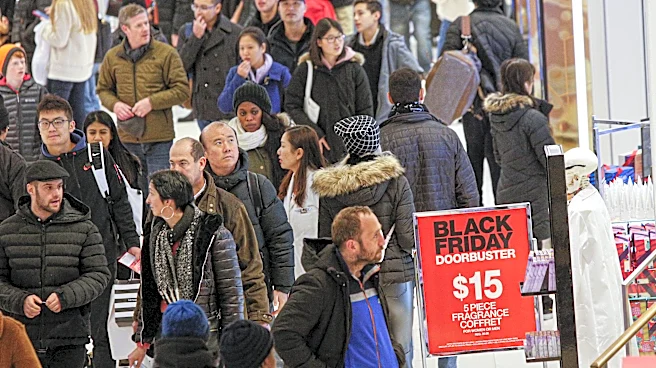
Retailers across the U.S. are initiating Black Friday sales significantly earlier this year, with many deals appearing before Halloween. This trend is a strategic response to economic uncertainties, including rising inflation and higher costs for essential
goods, which have impacted consumer budgets. Major retailers like Target, Gap, Old Navy, and Walmart have already launched early Black Friday promotions, with some, such as Ulta Beauty and Alo, starting sales as early as late October. The goal is to entice consumers to spend earlier in the holiday season, as many shoppers are looking for value and convenience. Despite economic pressures, consumer spending has remained strong, particularly in October, partly due to events like Amazon's Prime Big Deal Days.
Why It's Important?
This shift in holiday shopping timelines has significant implications for the U.S. retail industry and consumer behavior. By starting sales earlier, retailers aim to capture a larger share of consumer spending over an extended period, potentially mitigating the impact of a compressed holiday shopping window. This strategy also reflects a competitive environment where businesses are vying for consumer dollars amidst economic headwinds. For consumers, it means more opportunities to find deals but also potential pressure to make purchasing decisions sooner. Small businesses, however, face challenges in matching the deep discounts offered by larger chains, prompting them to innovate with events and pop-ups to attract customers. The National Retail Federation projects a 4.2% year-over-year increase in retail spending for November and December, reaching $1 trillion.
What's Next?
The trend of early Black Friday sales is expected to continue and likely intensify in future holiday seasons, as retailers adapt to evolving consumer habits and economic conditions. Consumers can anticipate a prolonged period of discounts and promotions leading up to the traditional Black Friday weekend. Retailers will likely continue to experiment with different timing and promotional strategies to maximize sales. Small businesses will need to find creative ways to differentiate themselves and compete with larger entities. The success of these early sales will be closely watched by economists and industry analysts to gauge consumer confidence and the overall health of the retail sector heading into the new year.
Beyond the Headlines
The early onset of Black Friday deals also highlights a broader cultural shift in how Americans approach holiday shopping. What was once a single-day event has transformed into a multi-week, if not multi-month, phenomenon. This extended shopping period can lead to consumer fatigue, but it also offers flexibility for those looking to spread out their holiday expenses. The psychological impact of constant sales and promotions can influence purchasing decisions, potentially leading to impulse buys or a feeling of urgency. Furthermore, the increased online shopping, a trend accelerated by recent years, continues to shape how these deals are presented and accessed, with many consumers opting to avoid in-store crowds.