






What's Happening?
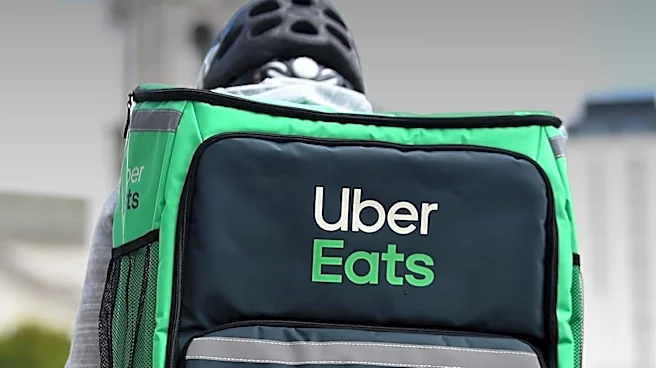
Kohl's has announced a new nationwide partnership with Uber Eats, enabling customers to order apparel, home goods, gifts, and beauty items for on-demand or scheduled delivery from over 1,100 Kohl's stores across the United States. This collaboration integrates
Kohl's extensive product assortment, including items from Sephora at Kohl's shop-in-shops, into the Uber Eats marketplace. The rollout is strategically timed ahead of the 2026 holiday shopping season, a period characterized by increased demand for fast and convenient delivery options. This move aims to provide customers with another flexible way to shop at Kohl's, catering to busy holiday schedules and the need for last-minute purchases. The partnership positions Kohl's alongside other retailers that are leveraging third-party delivery platforms to enhance their omnichannel presence and reach a broader customer base.
Why It's Important?
This partnership is significant for Kohl's as it directly addresses the evolving consumer preference for convenience and rapid delivery, especially during peak shopping seasons like the holidays. By integrating with Uber Eats, Kohl's can tap into a vast network of delivery riders and reach customers who might not otherwise visit physical stores. This expansion of its omnichannel strategy is crucial for offsetting potential weaknesses in store traffic and transaction volumes. For investors, this move indicates Kohl's commitment to digital channels and marketplace expansion, which could be a catalyst for growth. However, it also introduces potential risks, such as increased operating costs due to vendor fees and fulfillment complexities, which could impact margins and earnings. The success of this initiative will likely be measured by whether increased digital sales through partners like Uber Eats can offset store softness without disproportionately raising selling and fulfillment expenses.
What's Next?
In the immediate future, Kohl's will be closely monitoring the performance of this new delivery service, particularly during the crucial holiday shopping period. Upcoming quarterly disclosures will provide key insights into whether the partnership successfully drives digital and marketplace sales and how it impacts overall operating costs and profitability. The company will need to assess if the increased convenience translates into higher sales volumes that justify the associated expenses. Furthermore, Kohl's may explore expanding its offerings or refining its delivery strategy based on customer feedback and operational data. The retail industry will also be watching to see if this partnership sets a new standard for department stores in leveraging third-party delivery platforms, potentially influencing other retailers to adopt similar strategies to enhance their market reach and customer service.
Beyond the Headlines
The collaboration between Kohl's and Uber Eats reflects a broader trend in retail where traditional brick-and-mortar stores are increasingly relying on technology and third-party logistics to remain competitive. This shift highlights the growing importance of the 'last mile' in retail, where efficient and rapid delivery can be a significant differentiator. For consumers, it signifies a continued blurring of lines between traditional shopping channels and on-demand services, making it easier to access a wider range of products with greater convenience. From an economic perspective, such partnerships can create new revenue streams for delivery platforms and potentially stimulate local economies by increasing demand for delivery services. However, it also raises questions about the long-term sustainability of such models for retailers, particularly concerning the balance between customer acquisition, operational costs, and profit margins in an increasingly competitive e-commerce landscape.