
What's Happening?
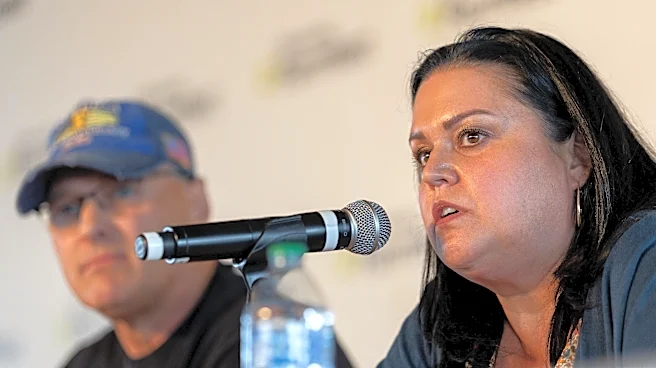
Voice actors attending Saratoga Comic Con have voiced significant concerns regarding the rapid advancement and integration of artificial intelligence (AI) into their industry. Veronica Taylor, known as
the original voice of Ash Ketchum from the Pokémon anime, stated that AI poses a danger to both actors and writers. She highlighted that budget cuts and a decrease in available work have already put pressure on the industry, with many professionals struggling to maintain their careers. Paul Schoeffler, who voiced several villains in the 'Courage the Cowardly Dog' cartoon, acknowledged that while AI is unlikely to replicate live theater, it presents a substantial problem for film and television. He noted that AI-generated content can create realistic-looking portrayals that are not actual human performances, raising questions about authenticity and job security in these sectors. The discussions at the event underscore a growing apprehension among voice actors about the future of their profession in an increasingly AI-driven landscape.
Why It's Important?
The concerns raised by voice actors at Saratoga Comic Con highlight a critical issue for the entertainment industry in the U.S., particularly regarding the impact of artificial intelligence on creative professions. The potential for AI to generate realistic voices and performances could lead to significant job displacement for voice actors, writers, and potentially other creative roles in film and television. This shift could alter the economic landscape for these professionals, potentially reducing income opportunities and increasing competition for fewer human-led projects. Furthermore, the ethical implications of AI-generated content, such as the use of actors' likenesses or voices without proper compensation or consent, are becoming a major point of contention. The industry faces the challenge of balancing technological advancement with the protection of human artistry and intellectual property rights. The discussions also reflect a broader societal debate about the role of AI in creative fields and its potential to redefine artistic production and consumption.
What's Next?
The ongoing discussions among voice actors and other creative professionals are likely to intensify as AI technology continues to evolve. Industry organizations and unions may push for stronger regulations and protections to safeguard the livelihoods of their members against unchecked AI integration. This could include advocating for new contractual clauses, intellectual property laws, and compensation models that address the use of AI in generating performances. There may also be a push for clearer distinctions between human-performed and AI-generated content to ensure transparency for audiences and to preserve the value of human artistry. As budgets in the entertainment sector remain tight, the industry will need to navigate the cost-saving potential of AI against the ethical and professional concerns raised by its workforce. The future may see a hybrid model where AI assists in certain production aspects, but the demand for authentic human performance, particularly in live theater and high-profile projects, could remain strong.
Beyond the Headlines
The concerns expressed by voice actors extend beyond immediate job security, touching upon deeper philosophical and ethical questions about the nature of art and creativity in the age of artificial intelligence. The ability of AI to mimic human performance challenges traditional notions of authorship and authenticity, potentially blurring the lines between human and machine-generated art. This development could lead to a re-evaluation of what constitutes 'original' work and how creative contributions are valued and compensated. Moreover, the widespread use of AI in entertainment could influence cultural consumption, potentially leading to a more homogenized or algorithmically-driven creative output, which might diminish the unique and diverse voices that human artists bring. The debate also highlights the broader societal implications of AI, prompting discussions about the future of work, the role of human creativity in a technologically advanced world, and the need for ethical frameworks to guide the development and deployment of powerful new technologies.