






What's Happening?
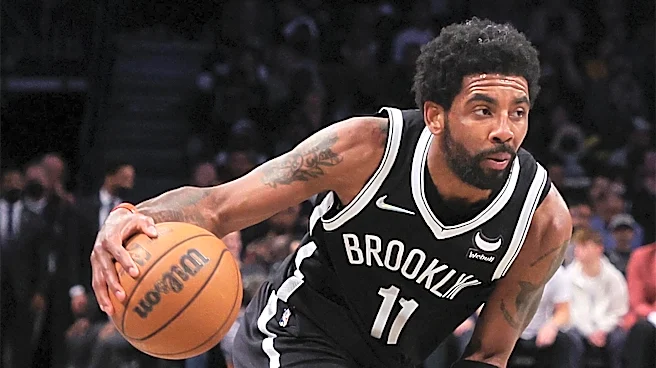
NBA star Kyrie Irving has publicly confirmed his decision to pay the NFL fine incurred by American football player Azeez Al-Shaair. Al-Shaair was penalized in September for wearing the name of Hind Rajab, a five-year-old Palestinian girl killed by Israeli
forces in Gaza, on his eyeblack during a game. Irving praised Al-Shaair's actions as a 'selfless act' and a part of a 'revolution this generation is building,' emphasizing the importance of speaking up for those without a voice. Al-Shaair has consistently used his platform, including social media and his eyeblack, to draw attention to the killings of Palestinian children. Despite facing fines and potential threats of removal from games, Al-Shaair has continued his tributes, honoring other slain children such as Wafa Akila, Lana and Bana Ahmad, Amal Abu Khater, and Maryam Ghanem in subsequent weeks.
Why It's Important?
This incident highlights the growing trend of athletes using their platforms to address geopolitical and human rights issues, often at personal and professional risk. Kyrie Irving's financial support and public endorsement of Al-Shaair's actions amplify the message and bring broader attention to the conflict in Gaza and its impact on children. It also sparks conversations about freedom of expression for athletes within professional sports leagues and the potential for disciplinary actions. The solidarity shown between athletes from different sports underscores a shared commitment to social justice and humanitarian causes. This act can inspire other public figures to take similar stances, potentially influencing public opinion and putting pressure on institutions to acknowledge and address these issues. The financial penalty imposed by the NFL also raises questions about the league's policies on player expression and activism.
What's Next?
It is likely that Azeez Al-Shaair will continue his tributes to slain Palestinian children, potentially leading to further fines or disciplinary actions from the NFL. Kyrie Irving may continue to use his platform to support similar causes and individuals. This situation could prompt other athletes to express their views on the conflict, potentially leading to more widespread athlete activism. The NFL might face increased scrutiny regarding its policies on player expression, potentially leading to calls for clarification or changes in how such displays are handled. The ongoing public discourse around these actions could also influence fan engagement and media coverage, further intertwining sports with sociopolitical issues.
Beyond the Headlines
This event transcends a simple sports story, touching upon deeper themes of moral responsibility, the power of individual protest, and the intersection of sports, politics, and human rights. Al-Shaair's actions, supported by Irving, challenge the traditional notion of athletes remaining apolitical, asserting their role as global citizens. It also brings into focus the ethical considerations of how professional sports leagues manage player activism, balancing commercial interests with freedom of speech. The choice to highlight specific child victims personalizes the conflict, making it more relatable and impactful for audiences who might otherwise feel detached. This act of solidarity also reflects a broader cultural shift where public figures are increasingly expected to use their influence to advocate for social causes, pushing the boundaries of traditional celebrity roles.