






What's Happening?
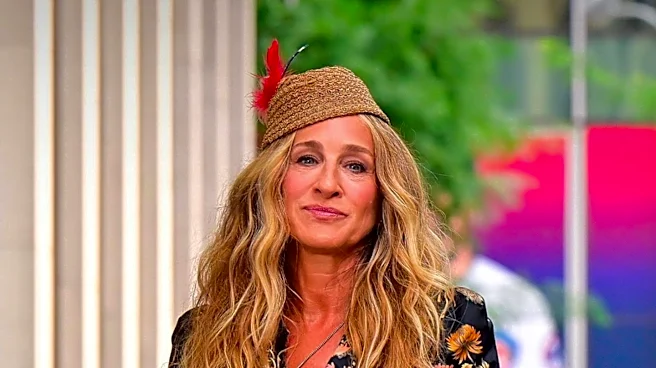
Sarah Jessica Parker has addressed a common misconception that she is identical to her iconic character, Carrie Bradshaw, from 'Sex and the City' and its spin-off 'And Just Like That.' Despite portraying the character for nearly three decades, Parker emphasized
in an interview that she is not Carrie. She acknowledged her deep connection to the role, which has made Carrie a fashion and cultural icon, particularly known for her unique and daring outfits. Parker recounted her willingness to experiment with costume designers Patricia Field and Molly Rogers during filming, even after long shooting days, to achieve the character's distinctive style. While she grew up near New York City and has adopted some New Yorker habits, like hailing a taxi, she firmly distinguishes her personal life and identity from that of her on-screen persona.
Why It's Important?
This clarification from Sarah Jessica Parker is significant for understanding the distinction between actors and their roles, a common challenge for public figures associated with long-running characters. For the U.S. entertainment industry, it highlights the powerful impact of iconic roles on public perception and the potential for blurring lines between fiction and reality. This phenomenon can affect an actor's career trajectory, public image, and personal life. It also underscores the cultural influence of characters like Carrie Bradshaw, who become fashion trendsetters and societal benchmarks, impacting consumer behavior and fashion trends. The enduring association of Parker with Bradshaw demonstrates the lasting power of successful television franchises and their ability to shape cultural narratives and individual identities in the public imagination.
What's Next?
Sarah Jessica Parker's statement may encourage a more nuanced public discourse about her career and future projects, allowing audiences to appreciate her work beyond the 'Sex and the City' universe. It could also prompt other actors to speak out about similar experiences of being conflated with their characters. For the entertainment industry, this ongoing conversation about actor-character identity can influence how public relations and marketing strategies are developed for stars of long-running series. It might also lead to more diverse roles for Parker, as she seeks to further establish her identity as an actress separate from Carrie Bradshaw. The discussion will likely continue to evolve as 'And Just Like That...' progresses and new generations discover the original series.
Beyond the Headlines
The persistent conflation of Sarah Jessica Parker with Carrie Bradshaw delves into deeper psychological and sociological aspects of celebrity culture. It reflects how audiences often project fictional attributes onto real individuals, creating a 'parasocial relationship' where the line between performer and character becomes indistinct. This phenomenon raises questions about identity, authenticity, and the public's consumption of media. Ethically, it highlights the challenges celebrities face in maintaining personal boundaries and privacy when their professional roles become deeply ingrained in the collective consciousness. Culturally, Carrie Bradshaw's enduring influence as a fashion and lifestyle icon speaks to the power of media to shape aspirations and self-perception, demonstrating how fictional characters can become benchmarks for real-world identity and style.