





What's Happening?
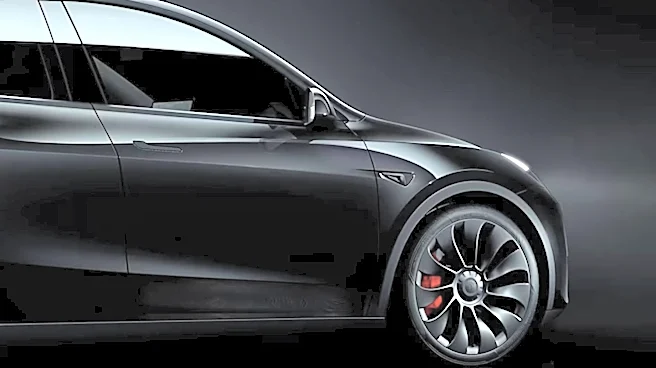
Tesla has introduced an optional Vehicle-to-Load (V2L) adapter for its Model Y Premium and Performance trims in the U.S. and Puerto Rico, allowing these electric vehicles to act as a power source for external gadgets. The adapter, priced at $80, enables
the Model Y to export up to 2.4 kW of power through a 120V, 20A outlet, suitable for charging items like laptops and lights. However, the rollout has generated complaints from some Model Y owners, including those with newer vehicles, who discovered their cars are not compatible with the new feature. This incompatibility stems from their vehicles possessing an older 48A, single-phase Power Conversion System (PCS), rather than the newer two-piece PCS required for V2L functionality. Upgrading the PCS to enable V2L can cost around $1,750 for parts alone, excluding labor, making it an expensive retrofit for affected owners.
Why It's Important?
The introduction of V2L functionality in Tesla Model Y vehicles signifies a growing trend in the electric vehicle market towards multi-utility vehicles that can serve as mobile power sources. This feature enhances the versatility of EVs, offering convenience for outdoor activities, emergencies, or as a backup power supply. For the U.S. market, this could influence consumer purchasing decisions, as the ability to power external devices adds significant value beyond transportation. However, the compatibility issues and the cost of upgrades for existing owners could lead to customer dissatisfaction and impact brand loyalty. This situation highlights the challenges in rapidly evolving automotive technology, where new features may not be universally applicable across all models, even recent ones. It also underscores the importance of clear communication from manufacturers regarding feature availability and upgrade paths to manage consumer expectations.
What's Next?
Tesla will likely need to address the concerns of Model Y owners whose vehicles are not compatible with the new V2L adapter. This could involve offering clearer guidance on compatibility, potential upgrade options, or future plans for broader V2L integration across its fleet. The company may also face pressure to streamline the upgrade process or offer more affordable solutions for owners wishing to utilize this feature. Competitors, who have offered V2L capabilities for some time, may leverage Tesla's current compatibility issues in their marketing. The incident could also prompt a re-evaluation of how new features are rolled out and communicated to the customer base, especially for a company known for its over-the-air updates and continuous innovation. Future Model Y productions are expected to integrate the necessary PCS for V2L functionality as a standard or optional feature.
Beyond the Headlines
This development touches upon the broader implications of vehicle-to-everything (V2X) technology, which envisions cars as integral parts of a larger energy ecosystem. While V2L is a step towards this, the current rollout issues highlight the complexities of integrating advanced functionalities into existing vehicle architectures. The ethical dimension arises from consumer expectations versus the reality of technological limitations and upgrade costs, potentially creating a divide between early adopters and those with slightly older models. Culturally, the ability to power homes or campsites from an EV could shift perceptions of vehicle utility, moving beyond mere transportation to a more integrated lifestyle tool. Long-term, as V2X technologies mature, they could play a significant role in grid stability, disaster relief, and energy independence, but the current challenges underscore the need for seamless integration and clear consumer pathways.