





What's Happening?
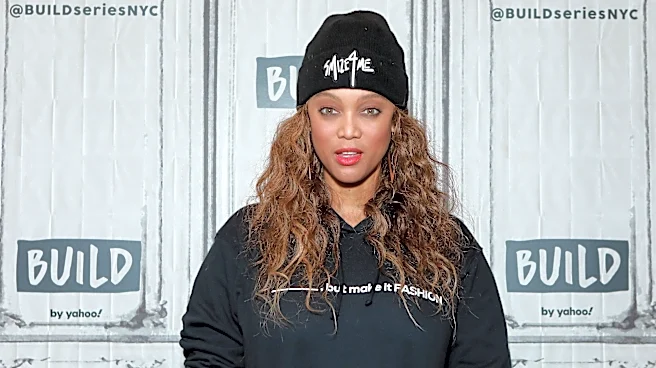
Tyra Banks has filed a defamation lawsuit against Netflix and the directors of the three-part documentary series 'Reality Check: Inside America's Next Top Model,' Mor Loushy and Daniel Sivan. The lawsuit, filed four months after the documentary's February
2026 release, alleges that producers selectively edited her roughly three-and-a-half-hour interview down to about 16 minutes. Banks claims this editing created a false impression regarding her knowledge of an alleged sexual assault involving a former contestant. Netflix has denied the documentary is defamatory and filed a motion in August 2026 seeking to have the lawsuit dismissed. The documentary featured interviews with Banks, former judges, staff members, and contestants, revisiting some of the show's more extreme challenges and judging moments, which had garnered renewed criticism online years after the series concluded. Banks had previously acknowledged that some choices made on the show would be approached differently today, while also defending its efforts to broaden beauty definitions.
Why It's Important?
This lawsuit highlights the growing tension between documentary filmmakers and subjects, particularly when sensitive or controversial topics are revisited. For Tyra Banks, a prominent figure in fashion and television, the outcome could significantly impact her public image and legacy, especially concerning her role in 'America's Next Top Model' (ANTM). The show, which ran for 24 cycles, was a cultural phenomenon but has faced increasing scrutiny over its treatment of contestants and certain challenges. A defamation ruling could set a precedent for how public figures can challenge their portrayal in documentaries, particularly regarding editing choices. For Netflix and the filmmakers, the case tests the boundaries of journalistic integrity and creative freedom in documentary production. The legal battle will likely focus on the intent behind the editing and whether the resulting portrayal of Banks constitutes actual malice or a fair representation of her statements within the context of the documentary's narrative.
What's Next?
The immediate next step is for the court to rule on Netflix's motion to dismiss the lawsuit. If the motion is denied, the case will proceed to discovery, where both sides will exchange evidence, including unedited interview footage and internal communications related to the documentary's production. This process could reveal more details about the editing decisions and the filmmakers' intentions. The legal proceedings could be lengthy, potentially involving depositions and expert testimonies on media ethics and defamation law. The outcome, whether a settlement or a court ruling, will have implications for both Tyra Banks's reputation and the documentary industry's practices regarding subject interviews and editorial control. Regardless of the legal result, the lawsuit itself draws further attention to the criticisms surrounding ANTM and Banks's role in its production.
Beyond the Headlines
Beyond the immediate legal implications, this lawsuit delves into deeper questions about narrative control, media representation, and the ethics of reality television. The renewed criticism of 'America's Next Top Model' years after its run reflects a broader societal shift in how media content, particularly that involving power dynamics and vulnerable individuals, is viewed through a contemporary lens. Banks's lawsuit can be seen as an attempt to reclaim her narrative and defend her professional integrity against what she perceives as a misrepresentation. It also underscores the challenges faced by creators of long-running reality shows when their past work is re-evaluated in a different cultural climate. The case could influence how future documentaries approach interviews with subjects, potentially leading to more stringent agreements or greater transparency regarding editing processes to avoid similar legal disputes.