




What's Happening?
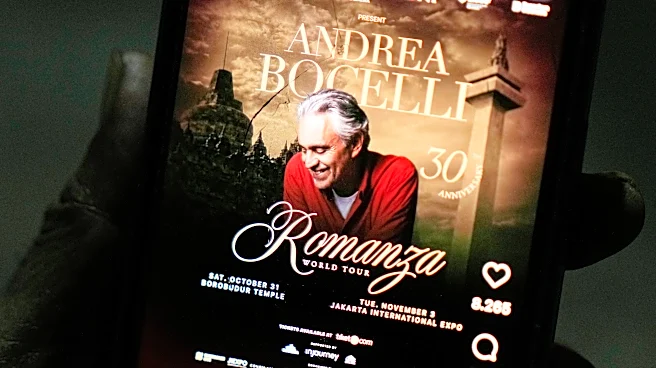
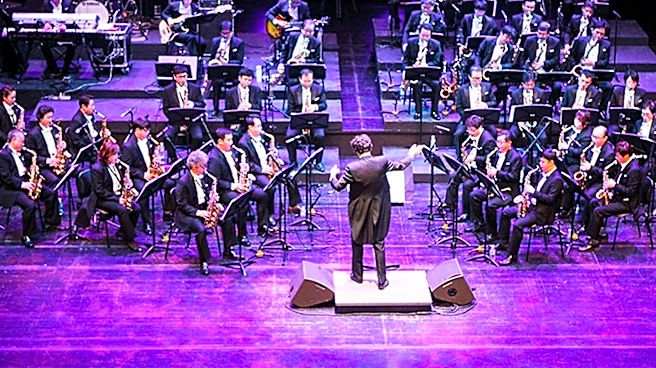
Two upcoming concerts by Italian tenor Andrea Bocelli in Indonesia are scheduled to proceed despite strong opposition from the Indonesian Ulema Council, the country's most influential body of Islamic scholars. The council demanded the cancellation of Bocelli's
performances, citing his past support for Israel, including a 2010 fundraiser for the Israel Defense Forces and a 2022 concert in Tel Aviv. Indonesia, the world's most populous Muslim-majority nation, does not have formal diplomatic relations with Israel and has historically been a staunch supporter of Palestinians. The concerts are part of Bocelli's Romanza 30th Anniversary World Tour and are slated for October 31 at the UNESCO-listed Borobudur Temple and November 3 in Jakarta. Promoter Shoemaker Live insists the events will support Indonesia's tourism and culture sectors, stating that Bocelli intends to dedicate songs to humanity and world peace.
Why It's Important?
This situation highlights the complex interplay between cultural events, political sensitivities, and international relations, particularly in a nation with a strong religious identity and a clear stance on the Israeli-Palestinian conflict. The Indonesian Ulema Council's firm opposition underscores the deep-seated support for Palestinians within Indonesia's Muslim community. The decision by the concert promoter to proceed despite these objections indicates a prioritization of cultural and economic benefits, such as boosting tourism, over potential religious and political backlash. This event could serve as a case study for how international artists and event organizers navigate geopolitical issues when planning performances in religiously and politically sensitive regions. It also demonstrates the potential for cultural events to become focal points for broader political and social debates.
What's Next?
The concerts are set to take place as planned on October 31 and November 3. The promoter, Shoemaker Live, has indicated that Andrea Bocelli will dedicate songs to humanity and world peace during his performances, potentially as a gesture to mitigate the controversy. The Andrea Bocelli Foundation has also announced a fundraising campaign, including a pledge to donate 100,000 pairs of shoes to children in the Holy Land and other war-affected regions, which could be seen as an attempt to address humanitarian concerns raised by the opposition. The Indonesian Ulema Council has reaffirmed its opposition, suggesting that the concerts could 'hurt the feelings of many Indonesians who strongly support Palestinians.' Future reactions from the public and religious groups in Indonesia, as well as the broader international community, will likely depend on how the concerts unfold and the messaging surrounding them.
Beyond the Headlines
The controversy surrounding Andrea Bocelli's concerts in Indonesia delves into the broader implications of 'cultural diplomacy' and the challenges artists face when their past actions or political affiliations intersect with the deeply held beliefs of their audience. This incident reveals the limits of separating art from politics, especially in a globalized world where information about an artist's background is readily accessible. It also brings to light the power of religious and civil society organizations to influence public discourse and pressure event organizers and governments. The decision to proceed with the concerts, coupled with humanitarian gestures, suggests an attempt to bridge divides, but it also risks alienating segments of the population who view such actions as insufficient or disingenuous. This event could contribute to a wider discussion on the responsibilities of public figures and the role of cultural exchange in fostering understanding versus inadvertently exacerbating political tensions.