





What's Happening?
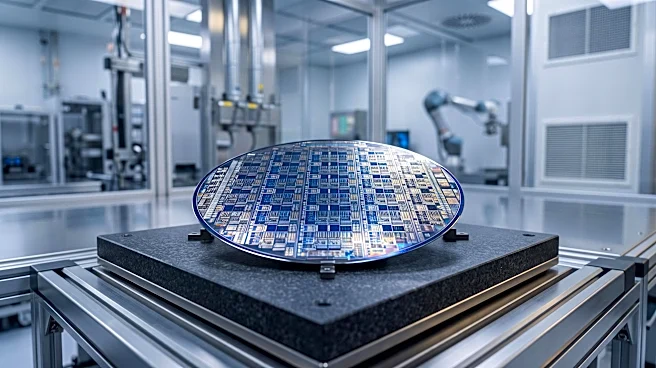
China is significantly increasing security and restricting access to its key semiconductor hubs, such as Zhangjiang Science City in Shanghai, which houses major companies like SMIC and Hua Hong Semiconductor. This heightened secrecy comes as the U.S.
has expanded its export controls, blocking China's access to advanced computing chips, manufacturing equipment, and technology since October 2022. The restrictions have been progressively tightened, with 24 types of manufacturing equipment, three software tools, and HBM added to the controlled items list by December 2024, and 140 Chinese entities sanctioned. This has made it increasingly difficult for outsiders to assess the actual technological capabilities and development of China's semiconductor industry. Chinese companies are now largely declining interview requests and site visits, a stark contrast to previous years when they were more open about their advancements. This shift indicates a strategic move to protect their domestic efforts in achieving semiconductor self-sufficiency.
Why It's Important?
The increased secrecy surrounding China's semiconductor industry has significant implications for global technology and trade. U.S. export controls, intended to curb China's technological advancement, have paradoxically accelerated its drive for self-sufficiency. Chinese companies are now prioritizing domestically made alternatives for equipment and materials, deploying them in mass production and accumulating critical process data. This rapid localization effort, backed by full government support, is transforming self-sufficiency from a strategic choice into a matter of survival for China's semiconductor sector. The shift could lead to a more independent Chinese semiconductor supply chain, potentially reducing its reliance on foreign technology and impacting global market dynamics. For the U.S. and its allies, this means a more opaque and potentially more competitive landscape in the semiconductor industry, making it harder to gauge China's progress and adjust policy accordingly.
What's Next?
China is expected to continue its aggressive localization efforts across the entire semiconductor supply chain, focusing on critical bottlenecks like key equipment and materials. While some industry experts suggest that Chinese products still lag behind international standards in certain areas, the pace of improvement is rapid, with domestic equipment's share in China's semiconductor manufacturing equipment market rising significantly. China is also pursuing a dual strategy: using foreign equipment for export-oriented products to meet global quality standards, while deploying domestic equipment for products within China. This approach allows them to gain production experience with domestic technology while maintaining export competitiveness. The long-term goal is to convert mass-production experience and price competitiveness into advanced technological competitiveness, which could eventually challenge the technological advantages held by countries like South Korea in memory chips and other advanced semiconductor areas.
Beyond the Headlines
The intensified secrecy and rapid localization in China's semiconductor industry highlight a broader geopolitical struggle for technological dominance. The U.S. strategy of export controls, while aiming to slow China's progress, has inadvertently fostered a more insular and determined approach to self-reliance within China. This could lead to the emergence of a parallel, self-contained semiconductor ecosystem in China, potentially fragmenting the global technology supply chain. The ethical implications involve questions of fair competition and technological decoupling, where national security concerns override traditional free-market principles. Long-term, this could result in two distinct technological spheres, each with its own standards, suppliers, and innovations, impacting global collaboration, research, and development in critical technologies. The ability of China to convert its domestic market scale into advanced technological leadership remains a crucial factor in shaping the future of the global semiconductor landscape.