



What's Happening?
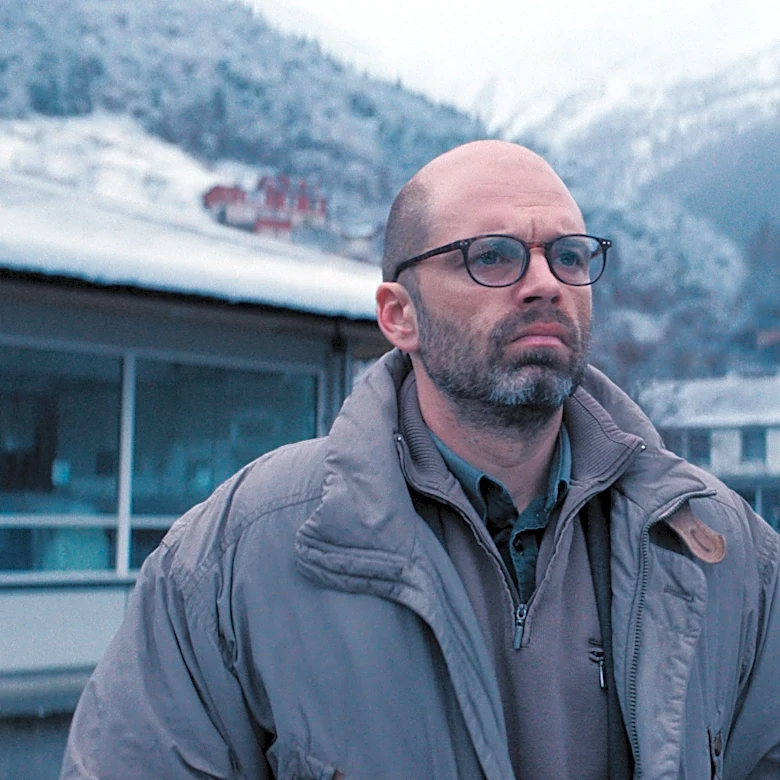
Olivier Assayas's film 'The Wizard of the Kremlin' is being critically analyzed for its depiction of Vladimir Putin's rise to power and the mechanisms of contemporary Russian authoritarianism. The film, based on Giuliano da Empoli’s novel, follows Vadim
Baranov, a fictional character inspired by political strategist Vladislav Surkov. Baranov's trajectory from avant-garde theater to the Kremlin highlights how modern politics leverages narratives and entertainment to manage reality, rather than relying on truth. The film explores how art, television, advertising, politics, and war converge under a single logic, where image, enemy, and public consumption dictate outcomes. Critics note that while the film is intelligent and didactic, it often prioritizes explanation over dramatization, turning characters into arguments and scenes into illustrated lectures on contemporary Russia. The narrative covers significant historical events such as the collapse of the Soviet Union, the rise of oligarchs, the Chechen War, and the annexation of Crimea, framing them through Baranov's strategic lens.
Why It's Important?
The film's exploration of how contemporary dictatorships utilize entertainment to obscure truth holds significant relevance beyond Russia, reflecting a mechanism that has spread globally. It suggests that modern propaganda aims to destroy the possibility of shared facts by producing numerous, often contradictory, narratives, rather than imposing a single official version. This approach, where contradiction becomes part of the strategy and governments finance opposing groups, resonates with the current information landscape, particularly the internet's role in distributing resentment and conspiracy theories. The film implicitly critiques the collaboration of various societal figures—politicians, oligarchs, producers, intellectuals, artists, and opportunists—in building and sustaining authoritarian regimes. It underscores the idea that recognizing manipulation does not absolve those who contribute to such systems, making their responsibility even greater. The film's themes prompt reflection on the nature of truth, power, and public perception in an era where reality can be manufactured for political effect.
What's Next?
The critical reception of 'The Wizard of the Kremlin' suggests ongoing discussions about the film's artistic choices and its message regarding political power. Viewers and critics will likely continue to debate whether the film successfully translates its intellectual ideas into a compelling cinematic experience. The film's didactic approach, which some find overly solemn, may lead to further analysis of how historical and political narratives are presented in cinema. Future discussions could also focus on the ethical implications of fictionalizing historical figures and events, particularly the film's decision to create a fictional ending for Baranov that deviates from reality. This choice—murdering Baranov in the film while his real-life inspiration, Vladislav Surkov, is alive—raises questions about artistic license versus historical accuracy and the desire for moral closure in storytelling. The film's themes are likely to fuel broader conversations about the role of media and entertainment in shaping political realities.
Beyond the Headlines
The film delves into the deeper implications of how political power is constructed and maintained in the modern age, highlighting the erosion of objective truth. By portraying politics as a reality show where audiences only need to keep watching, not necessarily believe, it touches upon the ethical dimension of public engagement and critical thinking. The narrative suggests a long-term shift where regimes do not need to hide every door of their 'prison' but rather convince inhabitants that the outside world is more dangerous, thereby normalizing control through manufactured consent and fear. This reflects a cultural shift where entertainment and spectacle are not merely distractions but integral tools for political manipulation. The film also implicitly critiques the intellectual and artistic communities that may inadvertently or knowingly contribute to such systems, raising questions about their responsibility in upholding democratic values. The contrast between the film's fictionalized ending and reality underscores a societal desire for justice and accountability that real-world outcomes often fail to provide, revealing a tension between narrative satisfaction and complex truths.