






What's Happening?
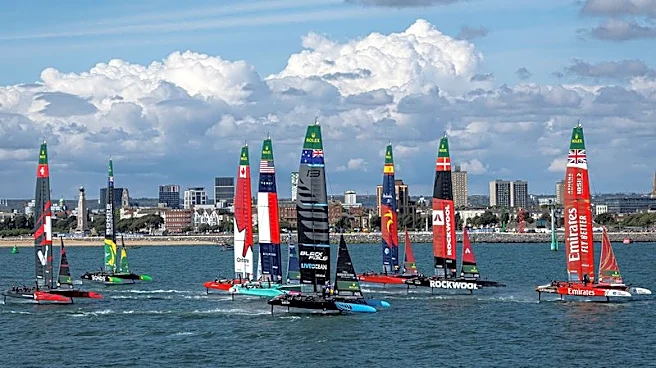
The Great Britain Sail Grand Prix in Portsmouth witnessed a dynamic day of racing with six different winners across six races. Despite the challenging conditions with winds blowing at 16 to 18 knots, New Zealand emerged as the leader in Group A, showcasing
consistent performance. The event featured a split-fleet format, dividing 13 teams into two groups, which added complexity to the races. The Australians, who have been dominant this season, struggled to maintain their usual lead. The Canadians, led by Giles Scott, faced a setback in the second race but managed a recovery in the final race of the day. Meanwhile, in Group B, the Swedish and American teams performed strongly, with the British team recovering from a poor start to win the last race of the day.
Why It's Important?
The results from the Great Britain Sail Grand Prix highlight the competitive nature of the event and the high level of skill required to navigate the challenging conditions. The diversity of winners underscores the unpredictability and excitement of the sport, which can impact team strategies and standings in the overall championship. For the Australians, who have been leading the season, the inability to dominate in Portsmouth could affect their confidence and strategy in future races. The event also draws significant spectator interest, contributing to the popularity and commercial success of SailGP as a global sailing competition.
What's Next?
As the competition continues, teams will need to adapt their strategies to maintain or improve their standings. The Australians, in particular, will be looking to regain their form and secure a victory in the upcoming races. The performance of the New Zealand team positions them as strong contenders for the overall championship, and their continued success could influence the dynamics of the competition. The event organizers will also be evaluating the effectiveness of the split-fleet format and its impact on the race outcomes.