







What's Happening?
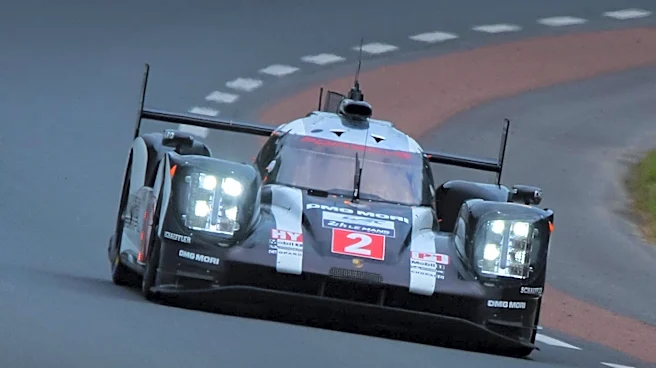
Team BRIT, a fully-disabled racing team established in 2015, is striving to become the first all-disabled team to compete in the prestigious Le Mans 24 Hours race. The team originated from a charity providing karting opportunities for disabled armed forces
personnel and has since expanded to include four vehicles and eight drivers. One of their drivers, a 23-year-old born without arms, has adapted to using his feet for daily tasks and is now preparing for his first race car test. His vehicle, like others in the team, has been specially adapted by Coventry company Jim Doran Hand Controls. Team principal Mike Scudamore emphasizes that Team BRIT races against able-bodied competitors across the UK, as there is no separate class for disability in their competitions. This initiative highlights a significant step towards inclusivity in professional motorsport.
Why It's Important?
Team BRIT's ambition to compete in the Le Mans 24 Hours holds significant importance for several reasons. Firstly, it challenges traditional perceptions of disability in elite sports, demonstrating that physical limitations do not preclude participation at the highest levels of motorsport. This effort can inspire individuals with disabilities globally, showcasing what is achievable through adaptation, determination, and technological innovation. Secondly, by competing directly against able-bodied drivers, Team BRIT promotes a more inclusive and equitable sporting environment, pushing for recognition based on skill and performance rather than physical ability. This could lead to broader discussions and changes in other sports regarding accessibility and integration. Furthermore, the technological advancements in adapting race cars for disabled drivers could have wider applications, potentially benefiting everyday mobility solutions for people with disabilities.
What's Next?
Team BRIT is currently preparing for upcoming races and tests, with the ultimate goal of entering the Le Mans 24 Hours. The team's drivers, including the 23-year-old without arms, are actively seeking sponsors to support their ambitious endeavor. Continued participation in races across the UK will be crucial for gaining experience, refining their adapted vehicles, and building their profile within the motorsport community. Success in these preliminary competitions will be vital for attracting the necessary funding and recognition to qualify for and compete in Le Mans. The team's journey will likely involve ongoing technological development for their race cars and continuous training for their drivers, as they aim to prove their capability on one of motorsport's biggest stages.
Beyond the Headlines
Beyond the immediate goal of competing in Le Mans, Team BRIT's journey carries profound ethical and cultural implications. Their presence on the track challenges societal norms and biases surrounding disability, fostering a more inclusive narrative where ability is redefined. This initiative could spark a broader cultural shift in how disabilities are perceived in competitive environments, moving away from segregation and towards integration. Legally, their participation without a separate disability class could set precedents for future regulations in sports, advocating for universal design principles in equipment and competition rules. The team's story also highlights the power of adaptive technology not just as an aid, but as an enabler for achieving peak performance, potentially influencing innovation in assistive technologies across various sectors. This endeavor is not just about racing; it's about redefining human potential and promoting a more equitable world.