


What's Happening?
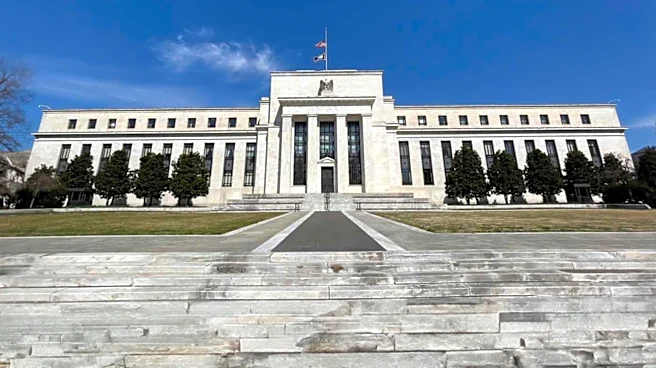
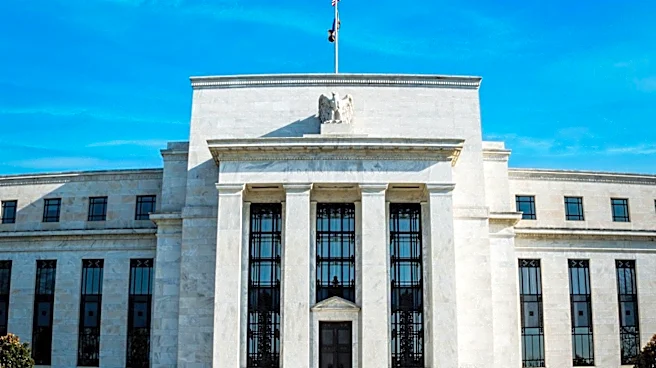
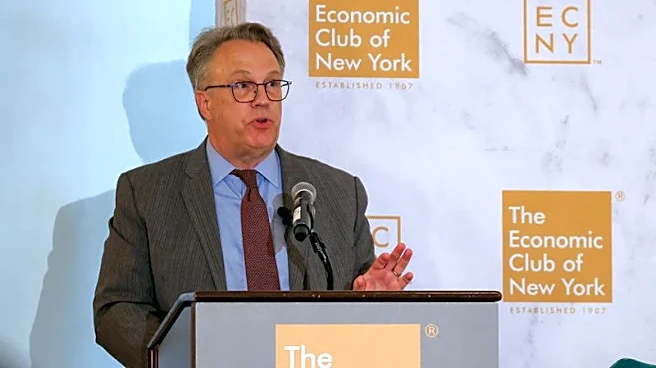
New York Federal Reserve President John Williams indicated that policymakers need to continue efforts to control inflation, suggesting a potential interest rate hike by the central bank. This statement, likely the last major policy comment before the Federal Open
Market Committee's December 8-9 meeting, comes as investors are pricing in a 97% chance of a quarter-percentage-point increase. Federal Reserve Governor Christopher Waller also stated on November 18 that a half-percentage-point increase might be necessary. Such a hike would make borrowing more expensive for consumers, affecting various forms of debt, including credit cards, auto loans, and potentially mortgage rates. The central bank's federal funds rate, while not directly paid by consumers, influences many borrowing costs, with changes typically rippling through the economy to slow activity and ease inflation.
Why It's Important?
A Federal Reserve rate hike in December would significantly impact U.S. consumers, who are already facing financial strain. With Americans carrying a record $1.29 trillion in credit card debt and many still paying off previous holiday purchases, higher interest rates on credit cards, which are particularly sensitive to Fed policy, would exacerbate their financial burden. Auto loan rates, already near historic highs, could climb further, making car purchases more expensive. While 15- and 30-year fixed mortgage rates track long-term Treasury yields rather than the Fed's benchmark directly, aggressive tightening signals from Fed officials could still pressure these rates, potentially keeping them above 7% and maintaining a 'deep freeze' in the real estate sector. This could lead to reduced consumer spending, especially among lower-income and younger households, as borrowing becomes more costly and debt burdens grow.
What's Next?
The Federal Open Market Committee is scheduled to meet on December 8-9, where a decision on interest rates is widely anticipated. If the Fed proceeds with a rate hike, consumers can expect to see increased costs for credit card debt within one to two billing cycles. Auto loan rates may also continue their upward trend, impacting car buyers. The real estate market will be closely watching for any signals from Fed officials regarding future tightening, as this could influence long-term Treasury yields and, consequently, mortgage rates. While some consumers may cut back on spending, particularly on non-essential items, experts suggest that holiday spending might be among the last areas to be trimmed, with households first seeking savings elsewhere.