



What's Happening?
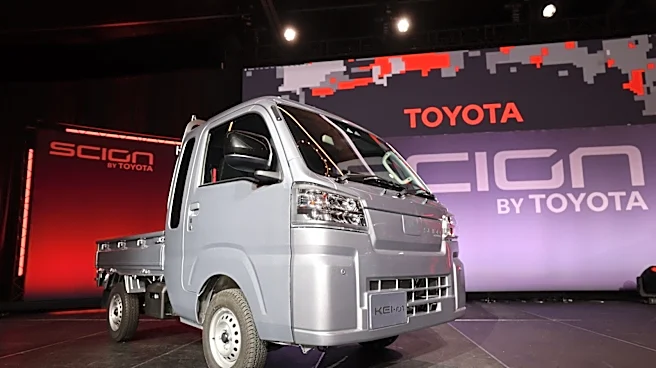
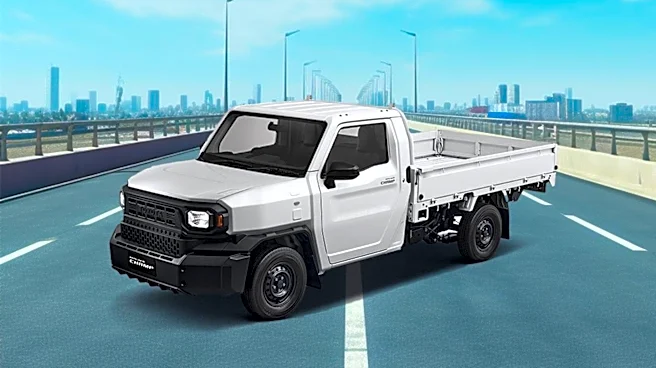
Toyota Motor North America has introduced a new mobility brand called Scion by Toyota, unveiling its first vehicle, the KEI-01. This ultra-compact utility truck is slated for a U.S. market release in the second half of 2027. The KEI-01 marks Toyota North America's
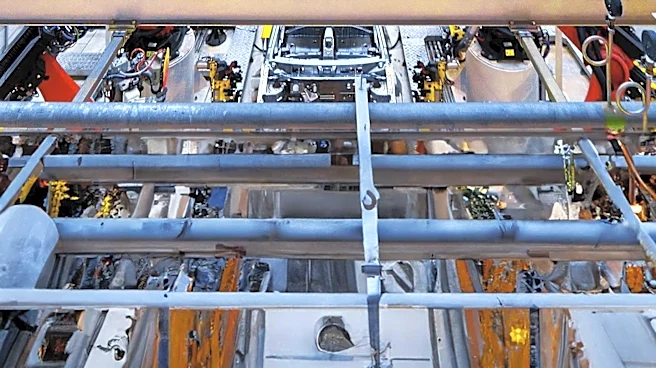
entry into the commercial low-speed vehicle market. This development is part of a broader strategic initiative by Toyota, which includes an annual investment of approximately Y1 trillion ($6.3 billion) from 2028 to modernize production equipment across its manufacturing operations and supplier base. The company plans to deploy around 400,000 robots, with 150,000 within Toyota facilities and 250,000 at supplier sites. This automation strategy aims to integrate physical artificial intelligence and robotics with the Toyota Production System, evolving through stages from conventional robotics to collaborative human-robot environments. Additionally, Toyota is expanding its proprietary software platform, Arene, to approximately 50 vehicle models globally by 2030.
Why It's Important?
The launch of Scion by Toyota and the KEI-01 signifies Toyota Motor North America's strategic move to diversify its product offerings and tap into the emerging commercial low-speed vehicle market in the U.S. This could create new competition and opportunities within the utility vehicle segment, potentially impacting established players and fostering innovation in compact, efficient commercial transport. The substantial investment in automation and robotics across Toyota's production network is crucial for enhancing manufacturing efficiency and reducing costs, which could translate into more competitive pricing or higher profit margins. This technological push also positions Toyota to potentially commercialize its robotics expertise as an independent business line, creating new revenue streams. The expansion of the Arene software platform across a vast number of vehicles underscores a shift towards software-defined vehicles, which could influence industry standards for in-car technology and connectivity, affecting both consumers and automotive technology providers.
What's Next?
The KEI-01 ultra-compact utility truck is expected to arrive in the U.S. market in the latter half of 2027, which will be followed by its market performance and consumer adoption. Toyota's annual Y1 trillion investment in modernizing production equipment is set to begin in 2028, with the phased rollout of robotics and automation technologies. This will likely lead to significant changes in manufacturing processes and potentially impact labor requirements within Toyota and its supplier network. The company also plans to introduce L2++ automated driving assistance on selected retail models using in-house AI and real-world driving data, along with the rollout of all-solid-state batteries in a vehicle by the end of 2028. These technological advancements will be closely watched by competitors and consumers, as they could set new benchmarks for vehicle performance, safety, and environmental impact.
Beyond the Headlines
The introduction of Scion by Toyota and the KEI-01 could represent a broader industry trend towards specialized, compact utility vehicles designed for specific commercial applications, potentially driven by urban logistics needs and sustainability goals. Toyota's aggressive investment in robotics and AI for manufacturing not only aims to improve efficiency but also reflects a long-term vision of integrating advanced technology into every aspect of its operations, from factory floors to vehicle software. This could lead to a redefinition of manufacturing jobs and skills required in the automotive sector. The ambition to commercialize Toyota's robotics technologies beyond its own manufacturing suggests a strategic pivot towards becoming a technology provider, potentially disrupting traditional industrial automation markets. The widespread deployment of the Arene software platform also highlights the increasing importance of software and data in the automotive industry, transforming vehicles into connected, intelligent platforms that offer new services and functionalities, raising questions about data privacy and cybersecurity.