





What's Happening?
Samsara Inc. (IOT) has released its Compounding Risk Report, which utilizes the company's patent-pending Risk Model to analyze driver behavior. The report's key finding indicates that the top 10% of risk-ranked drivers are responsible for 47% of all crashes,
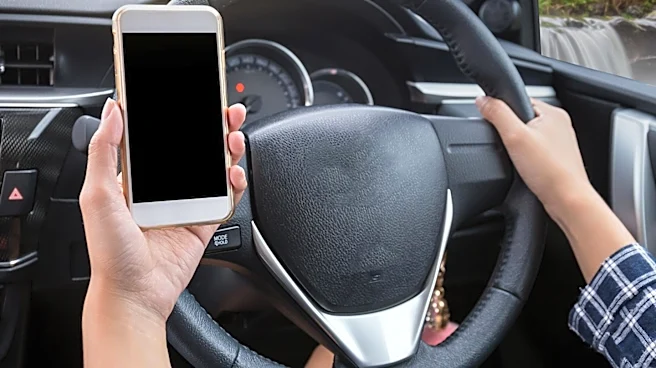
while the top 30% account for 76%. This research, based on approximately 50 factors including driving behavior, exposure, context, and driver development, aims to help safety leaders prioritize coaching efforts. Arpan Podduturi, Head of Safety Product at Samsara, emphasized that focusing intensive coaching on this small percentage of drivers can significantly impact overall safety. The report also highlights that risk compounds when multiple risky behaviors occur together; for instance, drivers exhibiting mobile use alone are 2.7 times more likely to be in the highest risk tier, which increases to 4.5 times with harsh braking, and 5.4 times when mobile use, distraction, and harsh braking are combined.
Why It's Important?
This report is important because it provides actionable insights for industries heavily reliant on vehicle fleets, such as transportation, logistics, and field services. By identifying that a small fraction of drivers contributes to a disproportionately high number of crashes, companies can optimize their safety programs and allocate resources more effectively. This targeted approach to driver coaching can lead to a significant reduction in accidents, which in turn can lower insurance costs, decrease vehicle downtime, and improve overall operational efficiency. Furthermore, a reduction in crashes enhances public safety on roads and can positively impact a company's reputation. The findings underscore the value of data-driven risk assessment in promoting a stronger safety culture and making more informed decisions regarding driver training and management.
What's Next?
Following the release of this report, companies utilizing Samsara's Connected Operations Platform are likely to implement more targeted coaching strategies based on the Risk Model's insights. Safety leaders will focus on identifying and providing intensive training to the top 10% of their risk-ranked drivers. The report suggests that addressing behaviors like aggressive driving, distracted driving, and speeding-related patterns will be key coaching targets. Samsara may further refine its Risk Model and offer enhanced tools or features to help businesses integrate these findings into their daily operations. The emphasis on behavioral patterns persisting over time also implies a need for continuous monitoring and adaptive coaching programs to reinforce safer decisions across the broader workforce.
Beyond the Headlines
Beyond the immediate implications for fleet safety, Samsara's Compounding Risk Report touches upon broader ethical and technological considerations. The ability to rank drivers by relative risk, even without predicting specific crashes, raises questions about privacy and the potential for algorithmic bias in driver assessment. While the goal is to improve safety, the use of such models could influence employment decisions or insurance premiums. Furthermore, the report highlights the power of big data and artificial intelligence in identifying complex patterns in human behavior, offering a glimpse into a future where predictive analytics play an even larger role in managing risk across various sectors. The findings also underscore the ongoing challenge of human factors in safety, even with advanced technology, and the critical role of effective coaching and a strong safety culture.