





What's Happening?
Home shoppers from New York City and Washington D.C. are increasingly viewing real estate listings in Rochester, New York, according to data from Realtor.com. These out-of-market viewers constitute over a third of all out-of-town views for Rochester-area
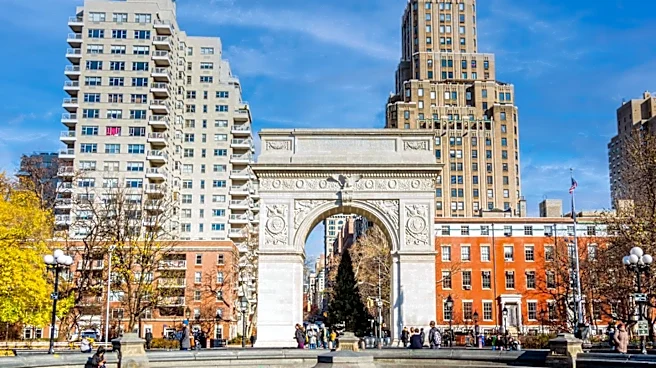
homes on the platform. Specifically, 24.7 percent of views to Rochester listings in the second quarter originated from the New York City metropolitan area, where the median home price is nearly 60 percent higher than in Rochester. An additional 11.5 percent of views came from the Washington, D.C./Alexandria, Virginia metro area, where the median listing price of $579,450 in July significantly contrasts with Rochester's $307,450. This trend indicates that buyers from more expensive markets are exploring Rochester as a more affordable alternative or a stronger job center, as noted by Jiayi Xu, senior economist at Realtor.com.
Why It's Important?
This influx of interest from New York City and Washington D.C. home shoppers has significant implications for Rochester's real estate market and its local economy. While online views don't always translate to purchases, a sustained trend of out-of-market buyers can exert upward pressure on local home prices. These buyers often come with larger financial resources, making what appears to be an aggressive offer to a local buyer seem like a bargain to them. This dynamic can particularly disadvantage first-time homebuyers and those with more limited budgets in Rochester, potentially pricing them out of their local market. For the Rochester economy, this trend could bring new residents with higher purchasing power, potentially boosting local businesses and tax revenues, but it also poses challenges in maintaining housing affordability and ensuring equitable access to homeownership for existing residents.
What's Next?
If the trend of out-of-market interest continues to translate into actual home purchases, Rochester could see a further acceleration in its housing market, potentially leading to increased competition and rising home values. Local real estate agents and developers may adapt their strategies to cater to this new demographic of buyers, possibly leading to more diverse housing options or developments. Policymakers in Rochester might need to consider strategies to address housing affordability, such as implementing programs to support local first-time homebuyers or exploring zoning changes to increase housing supply. The long-term impact will depend on whether these out-of-market buyers choose to relocate permanently, bringing their economic contributions and potentially altering the demographic and economic landscape of the city.
Beyond the Headlines
The phenomenon of out-of-market home shoppers from major metropolitan areas like New York City and Washington D.C. looking towards more affordable cities like Rochester reflects broader national economic and social shifts. The rising cost of living in major urban centers, coupled with increased remote work opportunities, is prompting a re-evaluation of where people choose to live. This trend could lead to a 'brain drain' from expensive cities and a 'brain gain' for more affordable ones, potentially diversifying Rochester's workforce and bringing new skills and perspectives. However, it also highlights the growing disparity in housing affordability across the U.S. and the challenges faced by communities in balancing economic growth with maintaining local character and accessibility for all residents. The cultural integration of new residents from different urban backgrounds will also be a subtle, yet significant, long-term implication.