





What's Happening?
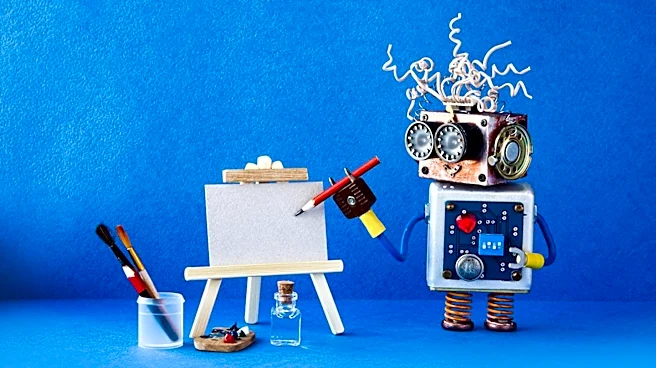
The article discusses the impact of generative AI on creative industries, highlighting a phenomenon termed 'AI oatmeal,' where AI-generated content often lacks differentiation and originality. As AI tools become more prevalent, they enable creative teams
to produce a vast amount of content quickly. However, this rapid production often results in work that is competent but indistinguishable, resembling existing work rather than offering something new or meaningful. The article emphasizes that AI is a tool that can amplify a design philosophy but cannot replace creative direction. Without a strong strategic foundation, teams risk producing average, uninspired content. The article also describes an experiment by Left Field Labs, where designers used AI to rethink the design of a military vehicle, demonstrating that while AI can assist in the creative process, the quality of the output depends heavily on the initial creative direction and conceptual clarity.
Why It's Important?
The increasing use of AI in creative industries has significant implications for how content is produced and valued. As AI tools become more accessible and capable, the challenge shifts from merely producing content to ensuring that the content is meaningful and original. This shift underscores the importance of human creativity and strategic thinking in the creative process. For businesses and creative teams, the ability to differentiate their work in a crowded market becomes crucial. The article suggests that the teams that will thrive are those with a clear design philosophy and the ability to make intentional creative decisions. This development could lead to a reevaluation of what constitutes valuable creative work and may influence hiring practices, with a greater emphasis on strategic and conceptual skills over technical proficiency with AI tools.
What's Next?
As AI continues to evolve, creative industries may see a greater emphasis on developing strong creative direction and strategic foundations. Companies might invest more in training and hiring individuals who can provide unique perspectives and steer AI tools effectively. Additionally, there could be a push for developing AI systems that better support creative differentiation, possibly through more advanced customization options or integration with human-led design processes. The ongoing dialogue about AI's role in creativity may also lead to new industry standards and best practices for using AI in creative work, ensuring that the technology enhances rather than diminishes the value of human creativity.
Beyond the Headlines
The broader implications of AI in creative work extend to ethical and cultural dimensions. As AI-generated content becomes more prevalent, questions about authorship, originality, and intellectual property may arise. There is also the potential for AI to influence cultural trends by amplifying certain styles or themes, which could lead to a homogenization of creative output. Furthermore, the reliance on AI tools might impact the diversity of voices and perspectives in creative industries, as those with access to advanced AI tools may dominate the market. These considerations highlight the need for ongoing discussions about the responsible use of AI in creative fields.