






What's Happening?
Recent interior design trends are moving away from the previously popular open-concept living spaces, favoring more separated and designated areas within homes. Michelle Campbell-Wiese, founder of Design Hall, an architectural design business, notes that
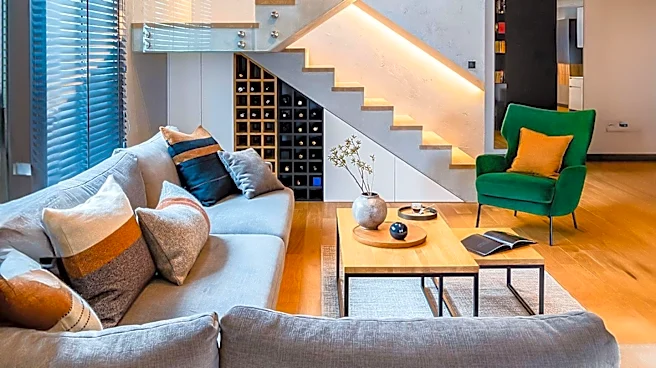
while open-concept layouts offer benefits like keeping everyone in view, they can also lead to unwanted noise and make it challenging to conceal everyday clutter. The shift is towards creating more defined spaces that offer a better balance of connection, privacy, and functionality. This trend is particularly relevant in acreage living, where homeowners have greater flexibility in designing their homes to suit their lifestyles and preferences. The focus is on making better use of existing space rather than simply making homes larger.
Why It's Important?
This shift in interior design reflects a broader re-evaluation of how living spaces serve the needs of occupants. For U.S. homeowners and the construction industry, it signals a potential change in demand for home layouts. Builders and architects may need to adapt their designs to incorporate more defined rooms, potentially impacting material choices, structural planning, and overall home aesthetics. The emphasis on privacy and function over constant connectivity could influence how families interact within their homes and how they manage daily life. This trend also highlights the importance of professional design consultation, as homeowners seek to optimize their living environments for comfort and practicality, moving beyond the 'bigger is better' mentality to a 'better use of space' approach.
What's Next?
As this trend gains momentum, new home constructions and major remodels in the U.S. are likely to feature more distinct rooms and flexible spaces. Homeowners considering new builds or renovations may increasingly prioritize designs that offer both communal areas and private retreats. This could lead to innovations in modular design, movable partitions, and multi-functional rooms that can be adapted for various uses. The demand for professional architectural and interior design services is also expected to rise as individuals seek expert guidance to create homes that align with these evolving preferences for balance, privacy, and functionality. The real estate market may also see a gradual shift in what is considered a desirable home layout, potentially influencing property values and buyer expectations.
Beyond the Headlines
The move away from open-concept living could signify a deeper cultural shift towards valuing personal space and tranquility in an increasingly connected world. The constant exposure and potential for clutter in open layouts might contribute to a sense of overwhelm, leading people to seek more structured and private environments within their homes. This trend also touches upon the psychological impact of home design on well-being, suggesting that defined spaces can foster a greater sense of order, peace, and individual autonomy. Furthermore, it could encourage more thoughtful consumption and less emphasis on accumulating possessions, as the challenge of hiding clutter in open spaces becomes a design consideration. This evolution in home design reflects a desire for environments that support both social interaction and individual retreat.