







What's Happening?
A GameStop customer, identified as 'Josh' from Clackamas, Oregon, traded in hundreds of broken gaming consoles and received $10,690.06 in store credit. GameStop announced this transaction via a social media post, showcasing Josh with a stack of credit cards
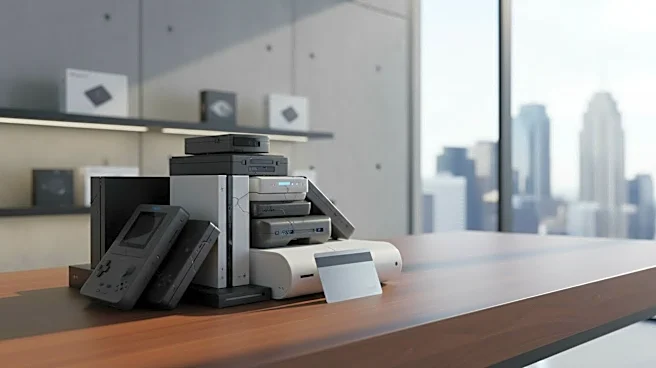
and numerous receipts. The trade-in included a variety of consoles such as Nintendo Switch Lites, Sega GameGear, Sony PSPs, various Nintendo Game Boys, Xbox 360s, PS4s, Xbox Ones, and Xbox Series X consoles. The value offered for broken consoles varied, with Xbox One consoles fetching $7.92 each, Xbox Series X consoles $10-11, and PS4 consoles $16 each. This transaction highlights GameStop's trade-in policy, which typically offers a higher value in store credit compared to cash, potentially up to 50% more. The primary trade focus for GameStop remains PlayStation, Xbox, and Switch consoles and games, with a limited selection of other electronics like MacBooks and iPhones.
Why It's Important?
This event underscores the significant role GameStop continues to play in the secondary market for video game hardware, even for non-functional items. For consumers, it illustrates a viable, albeit credit-based, method to dispose of old or broken electronics and gain substantial value for future purchases within the GameStop ecosystem. This policy can be particularly attractive to avid gamers who frequently purchase new titles or hardware. For GameStop, such large-scale trade-ins, even of broken items, provide a steady supply of components for refurbishment or parts, contributing to their inventory and potentially generating profit from repairs or recycling. It also reinforces their business model of encouraging in-store credit, which locks customers into future purchases at their retail locations. The transaction also sparks debate among consumers regarding the perceived value of trade-ins versus selling items independently on platforms like eBay, balancing convenience against potential higher cash returns.
What's Next?
GameStop will likely continue to promote its trade-in programs, emphasizing the benefits of store credit for customers looking to upgrade or purchase new games and consoles. The company may use this high-profile transaction as a case study to encourage more customers to bring in their used or broken electronics. Internally, GameStop will process the hundreds of consoles, determining which can be repaired and resold, and which will be used for parts or recycled. This influx of inventory could lead to more refurbished consoles being available for sale, potentially at lower price points, attracting budget-conscious consumers. The ongoing discussion on social media about the fairness of trade-in values versus independent selling might also prompt GameStop to further clarify or market the advantages of their credit-based system.
Beyond the Headlines
This transaction touches upon broader themes within the consumer electronics market, particularly the lifecycle of gaming hardware and consumer behavior regarding disposal and value recovery. It highlights the environmental aspect of electronic waste, as GameStop's trade-in program provides an avenue for recycling or repurposing devices that might otherwise end up in landfills. Ethically, it raises questions about the perceived 'swindle' by some social media users, contrasting the convenience of a quick trade with the potential for greater financial gain through more effort-intensive private sales. Culturally, it reflects the enduring appeal and value of gaming consoles, even in disrepair, and the community surrounding GameStop as a hub for gamers. The company's ability to extract value from 'junk' also speaks to the circular economy principles, where waste from one consumer becomes a resource for another, facilitated by a retail intermediary.