









What's Happening?
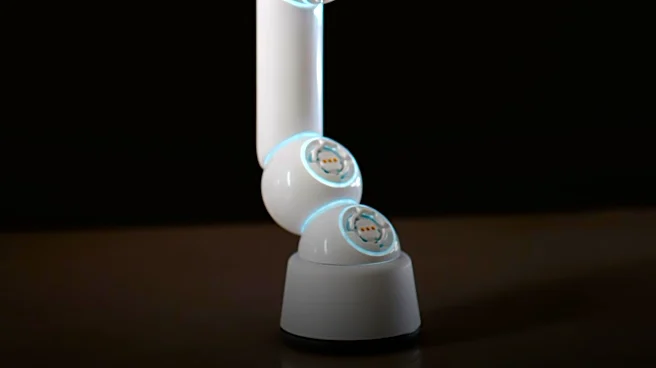
Robotics startup Morph is pioneering a novel approach to artificial intelligence by integrating it directly into hardware. The London-based company is embedding sensing and adaptive control into reconfigurable deformable materials, creating soft robotic
cells that can change morphology and stiffness in real-time. This innovation allows the cells to adapt to various environments and tasks, enhancing their interaction with humans. Morph's founder, Dr. Jean Nehme, emphasizes the importance of combining hardware and AI to create more effective robotic systems. The company aims to bridge the gap between software and hardware, inspired by the adaptability of natural organisms like octopuses. Morph's technology is designed to be integrated into a range of products, initially focusing on healthcare applications such as athletic performance and injury prevention.
Why It's Important?
The development of soft robotic cells by Morph represents a significant advancement in the field of robotics, particularly in enhancing human-robot interaction. By embedding AI directly into the materials, these robots can respond more naturally and safely to human movements, which is crucial for applications in healthcare and other industries. This approach could lead to more efficient and adaptable robotic systems, reducing manufacturing costs and increasing scalability. The integration of soft robotics into various sectors could revolutionize how robots are used, making them more versatile and accessible. Additionally, Morph's collaboration with industries and companies could accelerate the adoption of this technology, potentially leading to widespread changes in how robotic systems are designed and deployed.
What's Next?
Morph plans to expand its technology across different sectors, including automotive and industrial safety, beyond its initial focus on healthcare. The company is actively seeking partnerships with other robotics developers to integrate its soft robotic cells into a variety of applications. This collaborative approach aims to enhance the functionality and adaptability of robotic systems across industries. As Morph continues to develop and deploy its technology, it may influence the broader robotics market, encouraging other companies to explore similar integrations of AI and hardware. The involvement of high-profile investors like Pharrell Williams also highlights the growing interest in innovative robotics solutions, potentially attracting more investment and attention to the field.
Beyond the Headlines
Morph's approach to robotics challenges traditional views by emphasizing the importance of soft, adaptable materials in creating effective robotic systems. This perspective could lead to a shift in how robots are designed, moving away from rigid structures to more flexible and responsive forms. The company's focus on collaboration and diverse perspectives, as highlighted by its celebrity investor involvement, underscores the value of interdisciplinary innovation in advancing technology. As computational capabilities continue to improve, the potential for simulating and testing soft robotics will likely expand, opening new possibilities for their application in various fields.