





What's Happening?
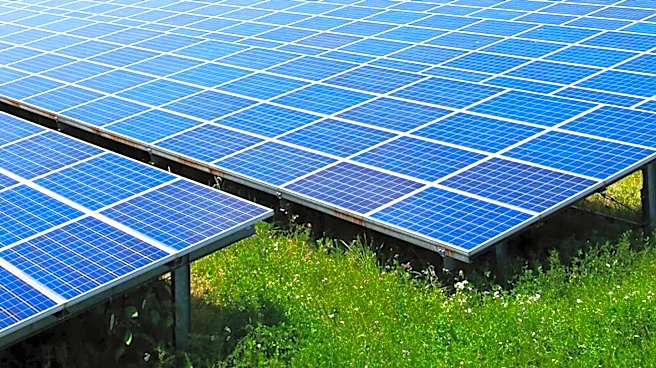
General Motors (GM) has unveiled its most significant clean energy initiative to date, involving the development of two solar generation facilities in Michigan: Branch Solar and Lake Iris Solar. These projects, developed by NorthStar Clean Energy, will
have a combined capacity of 300 megawatts, with 92% allocated to GM. The facilities are projected to generate approximately 539,000 megawatt-hours of electricity annually, enough to power about 52,000 homes. This output is equivalent to the combined annual electricity consumption of GM's Factory ZERO, Flint Assembly, and Lansing Delta Township Assembly plants. This move is part of GM's broader strategy to achieve 100% renewable energy for all its U.S. facilities, a goal it reached in 2025, making it the first U.S. automaker to do so. The projects represent an investment of approximately $550 million in Michigan, with Branch Solar accounting for $380 million and Lake Iris Solar for $170 million, creating over 550 full-time local construction jobs during their development.
Why It's Important?
This investment by GM underscores a growing trend among major U.S. corporations to transition towards renewable energy sources, driven by both sustainability goals and economic considerations. By securing long-term, low-cost renewable energy, GM aims to improve price predictability and reduce its exposure to volatile fuel markets, which is crucial for long-term planning in manufacturing and product investments. The projects also contribute to local economic development in Michigan, with Branch Solar helping Bethel Township receive a $1 million Renewables Ready Communities Award for local improvements. Furthermore, the Lake Iris project will incorporate a pollinator habitat, supporting local biodiversity and potentially enhancing solar panel efficiency. This initiative demonstrates how large-scale corporate clean energy adoption can foster business resilience, community benefits, and environmental stewardship, setting a precedent for other industries facing increasing energy demands and decarbonization pressures.
What's Next?
GM plans to utilize the renewable energy credits generated by these solar facilities to offset emissions associated with electricity purchased for its manufacturing operations, further advancing its vision of a zero-emissions future. The company has already reduced operational emissions (scopes 1 and 2) by 52% since 2018. The success and operational data from these Michigan solar projects could influence future clean energy investments by GM and other automakers, potentially accelerating the adoption of renewable energy across the U.S. manufacturing sector. The integration of pollinator habitats also suggests a growing focus on ecological benefits alongside energy production, which might become a more common practice in future renewable energy developments. The ongoing evolution of the grid and increasing energy demand, particularly from sectors like AI and electrification, will likely prompt more companies to explore similar localized renewable generation sources.