






What's Happening?
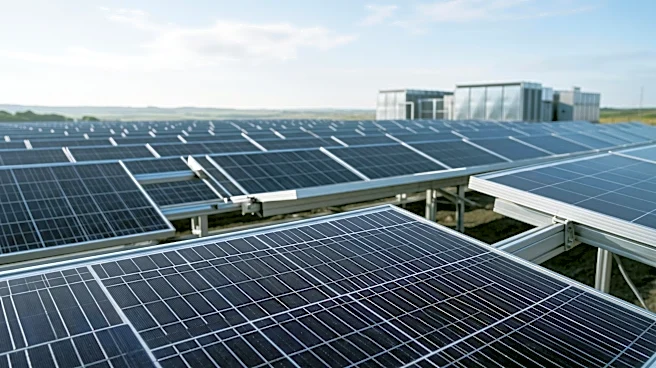
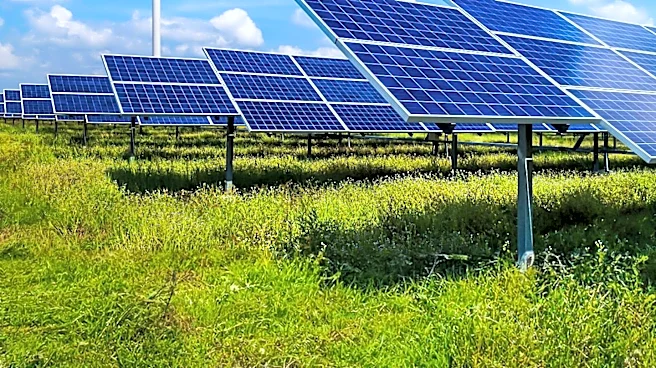
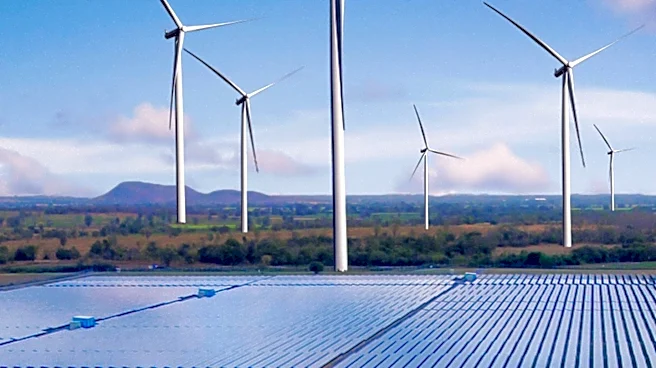
Duke Energy Florida has completed and activated its 74.9-megawatt Bailey Mill Solar Center in Jefferson County, near Monticello. This new facility features 163,000 solar panels, capable of powering approximately 15,000 homes at peak production. The center
generates carbon-free electricity without noise or emissions, contrasting with traditional gas-fired plants. According to Melissa Seixas, Duke Energy Florida state president, the solar center is designed to reduce the utility's reliance on purchasing natural gas, fuel oil, and coal from the open market. This reduction in fuel costs is expected to translate directly into savings for customers. The Bailey Mill Solar Center is one of five solar sites Duke Energy Florida has brought online since early 2025, marking a significant expansion of its renewable energy infrastructure in the state.
Why It's Important?
The activation of the Bailey Mill Solar Center is significant for Florida's energy landscape and its consumers. The project is projected to save customers $250 million in fuel costs over its operational life. This financial benefit stems from the solar center's ability to displace substantial amounts of fossil fuels annually—specifically, 1.2 million cubic feet of natural gas, 15,000 barrels of fuel oil, and 12,000 tons of coal at peak output. These savings are passed directly to customers through lower fuel charges on their monthly bills. The initiative also contributes to a broader strategy by Duke Energy Florida to expand its solar capacity, with plans for 11 more solar sites by 2028 and a target of over 5,500 megawatts of utility-scale solar by 2033. This expansion addresses Florida's growing electricity demand, driven by population growth, while mitigating the fuel price risks associated with gas generation.
What's Next?
Duke Energy Florida plans to continue its aggressive expansion of solar energy infrastructure, with 11 additional solar sites scheduled to come online before the end of 2028. The company aims to achieve more than 5,500 megawatts of utility-scale solar operating in Florida by the end of 2033, which would be roughly triple its current installed base. This ongoing development will further reduce the state's reliance on fossil fuels and is expected to generate cumulative savings for customers. As more solar centers are integrated into the grid, the financial benefits from reduced fuel purchases are anticipated to grow, impacting the monthly utility bills of Duke Energy Florida's 2 million customers. The company's strategy aligns with the increasing demand for electricity in Florida, providing a sustainable and cost-effective solution.
Beyond the Headlines
The shift towards utility-scale solar projects like the Bailey Mill Solar Center highlights a broader trend in the U.S. energy sector: the economic imperative driving renewable energy adoption. While environmental benefits are often cited, the direct financial savings for consumers through reduced fuel costs are a powerful motivator for utilities and policymakers. This approach demonstrates that clean energy initiatives can be framed not just as environmental mandates but as practical economic strategies that benefit everyday citizens. The long-term projections of significant cost savings underscore the evolving understanding of energy independence and stability, moving away from volatile fossil fuel markets towards predictable, zero-fuel-cost generation. This model could influence other states and utilities facing similar challenges of population growth and energy demand.