






What's Happening?
YYForce Inc., headquartered in Singapore, is actively expanding its operations in Malaysia with an ambitious revenue target. The company aims to double its Malaysian market revenue to $20 million by the 2027 fiscal year, a significant increase from the projected
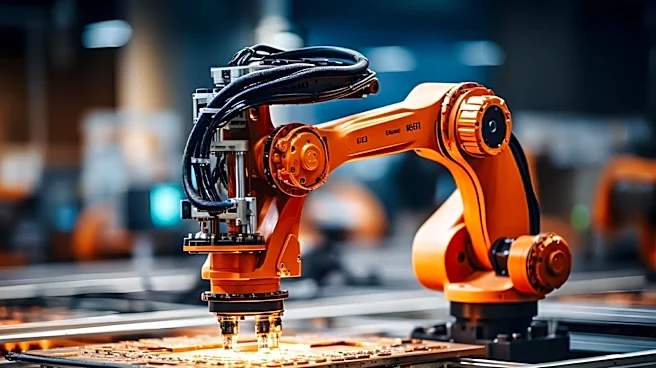
$10 million for fiscal year 2026, according to Taiwannews.com.tw. YYForce's core business strategy involves integrating human resource services with facility automation, particularly robotics technology, for the hotel and facility operations sectors. The company's Malaysian subsidiary has recently secured service agreements with several international hotel operators, which, combined with existing robotic deployments, are expected to solidify its integrated human resource and facility solutions strategy. These applications include cleaning, internal logistics, and customer service support, with customizable deployments based on property requirements.
Why It's Important?
This aggressive expansion by YYForce into the Malaysian market signifies a growing trend in the hospitality and facility management industries towards automation and integrated service solutions. The company's strategy of combining human services with robotics addresses the dual challenges of labor shortages and the demand for increased efficiency and cost-effectiveness. For the U.S. market, this development highlights the potential for similar integrated solutions to gain traction, especially in sectors facing high labor costs and operational complexities. The success of YYForce's model in Malaysia could serve as a case study for U.S. businesses considering investments in automation and outsourcing. Furthermore, the focus on international hotel operators suggests that global hospitality brands are increasingly open to adopting such technologies, which could influence their operational strategies worldwide, including in the U.S. This move also underscores the increasing interconnectedness of global business strategies and technological adoption.
What's Next?
YYForce's ability to achieve its $20 million revenue target in Malaysia by 2027 will depend on several critical factors, including the execution of its contracts, the quality of customer service, client retention, and further business development. The company plans to continue focusing on client retention, rigorous contract pricing, deployment execution, and cost management. Mike Fu, Executive Director of YYForce, emphasized the importance of converting market demand for integrated human resource and facility solutions into reliable services, disciplined growth, and stronger operational performance. This expansion is part of a broader growth strategy that includes markets like Singapore, Hong Kong, Thailand, Dubai, and Egypt. The company believes that scaling operations and optimizing its service mix will enhance long-term operational leverage and ultimately improve overall group profitability and shareholder value.
Beyond the Headlines
YYForce's strategy of blending human labor with advanced robotics in the hospitality sector raises interesting questions about the future of work and the evolving nature of service industries. While automation promises increased efficiency and cost savings, it also necessitates a re-evaluation of workforce roles and training. The company's success will depend not only on technological prowess but also on its ability to manage the human element of its integrated solutions, ensuring that employees are effectively trained to work alongside robots and that customer service quality is maintained or enhanced. This model could set a precedent for how other service-oriented industries, both domestically and internationally, approach automation. The ethical implications of job displacement versus job transformation, and the societal impact of a more automated workforce, will be critical considerations as such models become more prevalent globally, potentially influencing policy discussions and labor market adjustments in the U.S.