



What's Happening?
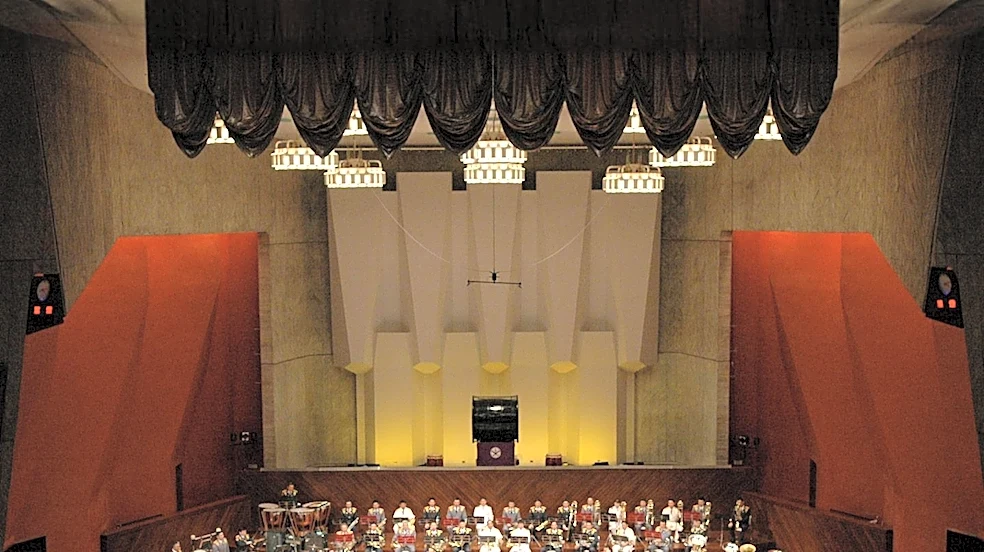
Yannick Nézet-Séguin, conductor, commenced his season-long cycle of Gustav Mahler's nine symphonies with an electrifying performance of the Fifth Symphony with the Philadelphia Orchestra at Carnegie Hall on October 13. This concert marked the beginning
of a series that will also feature the Met Orchestra and the Vienna Philharmonic. The performance of Mahler's Fifth Symphony was characterized by its technical brilliance and emotional intensity, with Nézet-Séguin's distinctive musical personality at the forefront. The program also included Anton Webern's 'Im Sommerwind,' a rarely heard early orchestral work, and Julia Wolfe's 'Liberty Bell,' co-commissioned by the Philadelphia Orchestra and Carnegie Hall to commemorate America's 250th anniversary. Nézet-Séguin's interpretation of Mahler's Fifth was noted for its clarity in complex passages and a powerful, victorious close to the Rondo-Finale, completing the symphony's emotional arc from tragedy to affirmation.
Why It's Important?
The launch of Yannick Nézet-Séguin's Mahler cycle at Carnegie Hall is a significant event in the classical music world, showcasing a major conductor's interpretation of one of the most influential symphonic composers. This extensive cycle, involving three prominent orchestras, underscores the enduring appeal and artistic depth of Mahler's works. For the Philadelphia Orchestra, it highlights their continued prominence on the international stage and their strong partnership with Nézet-Séguin. The inclusion of Anton Webern's early work provides a rare opportunity to hear a piece by a composer known for his later radical innovations, offering historical context to his development. Julia Wolfe's 'Liberty Bell,' a co-commission, is particularly important as it commemorates America's 250th anniversary, reflecting contemporary artistic engagement with national history and identity. Such high-profile performances at Carnegie Hall contribute to the cultural vibrancy of New York City and the broader U.S. classical music scene, attracting both seasoned enthusiasts and new audiences.
What's Next?
Over the coming season, Yannick Nézet-Séguin will continue to lead the Philadelphia Orchestra, the Met Orchestra, and the Vienna Philharmonic through the remaining eight numbered symphonies of Mahler at Carnegie Hall and the Metropolitan Opera. This ambitious cycle promises a comprehensive exploration of Mahler's symphonic output, offering audiences multiple opportunities to experience these monumental works under Nézet-Séguin's direction. The ongoing performances will likely generate considerable critical discussion and audience engagement, contributing to the conductor's legacy and the orchestras' reputations. The inclusion of contemporary works like Julia Wolfe's 'Liberty Bell' alongside classical masterpieces suggests a continued commitment to programming that balances tradition with innovation. Music lovers can anticipate a rich season of orchestral performances that delve into the emotional and intellectual depths of Mahler's symphonies.
Beyond the Headlines
Yannick Nézet-Séguin's Mahler cycle transcends a mere series of concerts; it represents a profound artistic undertaking that explores themes of life, death, and human experience embedded in Mahler's music. Mahler's symphonies, often described as musical narratives of the human condition, offer a mirror to societal anxieties and aspirations. Nézet-Séguin's interpretations, characterized by both meticulous detail and emotional intensity, invite audiences to engage deeply with these complex works. The juxtaposition of Mahler with Webern and Wolfe also highlights the evolution of orchestral music and its capacity to reflect different historical and cultural moments. Wolfe's 'Liberty Bell,' in particular, uses music to comment on the messy and boisterous struggle for freedom, connecting classical performance to contemporary social and political discourse. This cycle, therefore, is not just a celebration of musical genius but also a cultural dialogue that resonates with broader humanistic concerns, fostering a deeper appreciation for the power of orchestral music.