



What's Happening?
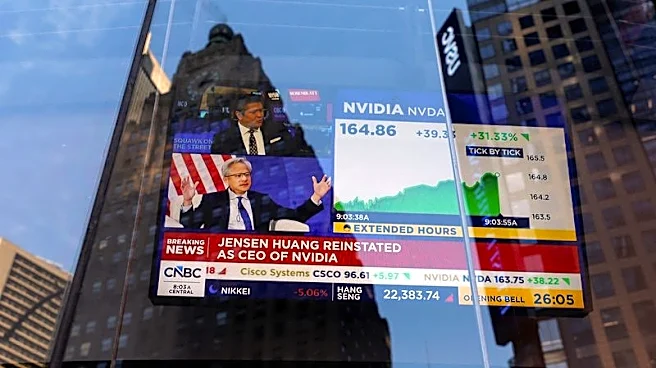
Nvidia CEO Jensen Huang has reportedly stated he does not believe in succession planning, asserting that such plans would imply some executives are more important than others. This stance comes shortly after his reinstatement as CEO. Huang's philosophy
aligns with Nvidia's unusually flat organizational structure, which features approximately 60 direct reports to him. This structure is credited by Huang for fostering information flow and employee empowerment. However, corporate governance experts and leadership advisors express concern, noting that executives overseeing specific business segments may not be adequately prepared to lead the entire company. S&P Global Ratings has placed Nvidia's AA credit rating on watch for a potential downgrade, citing concerns about management and governance, specifically highlighting the 'key man' risk due to the lack of a succession plan. The agency indicated a downgrade could occur within 90 days if governance deficiencies persist.
Why It's Important?
The absence of a formal succession plan at a major technology company like Nvidia, especially following recent leadership upheaval, raises significant governance and stability concerns. Investors and credit rating agencies, such as S&P, view succession planning as crucial for long-term corporate resilience and risk management. The 'key man' risk, where a company's success is heavily dependent on a single individual, can lead to market volatility and uncertainty if that leader departs unexpectedly. This situation could impact investor confidence in Nvidia, potentially affecting its stock performance and access to capital. Furthermore, the flat organizational structure, while promoting empowerment, may hinder the development of a broad leadership pipeline capable of stepping into a CEO role, creating a potential vacuum in future leadership transitions. The S&P credit watch signals that external bodies are scrutinizing Nvidia's governance practices, which could have broader implications for its financial standing and operational flexibility.
What's Next?
Nvidia's board faces increased pressure to address governance concerns, particularly regarding leadership succession, as highlighted by S&P Global Ratings. The credit rating agency's 90-day watch period indicates that the board will need to demonstrate improvements in governance to avoid a potential downgrade. This could involve re-evaluating their approach to leadership development and succession, even if not a formal 'plan B' in Huang's terms, to mitigate the 'key man' risk. Internally, the company may need to consider how to broaden the experience of its numerous direct reports to prepare them for more comprehensive leadership roles. External stakeholders, including investors and analysts, will likely monitor Nvidia's response to these governance challenges and any potential impact on its credit rating and market valuation. The company's long-term stability and leadership continuity will remain a key point of discussion.
Beyond the Headlines
The debate over succession planning at Nvidia touches upon broader philosophical questions about leadership, corporate structure, and the cult of personality in Silicon Valley. Huang's belief that succession planning implies executive hierarchy challenges conventional corporate governance wisdom, which often prioritizes continuity and risk mitigation through planned leadership transitions. This approach, while potentially fostering a more egalitarian internal culture, could inadvertently create systemic vulnerabilities. The situation also highlights the tension between a founder-CEO's vision and the expectations of external governance bodies and financial markets. The long-term implications could include a re-evaluation of how high-growth tech companies balance innovative, often unconventional, leadership styles with established corporate governance best practices. The outcome at Nvidia may influence how other tech firms approach leadership development and succession, particularly those with strong founder figures at the helm.