





What's Happening?
Kobelco has announced the acquisition of CNH's construction equipment business. This strategic move aims to broaden Kobelco's product offerings and strengthen its global presence in the construction equipment industry. According to Kobelco's announcement,
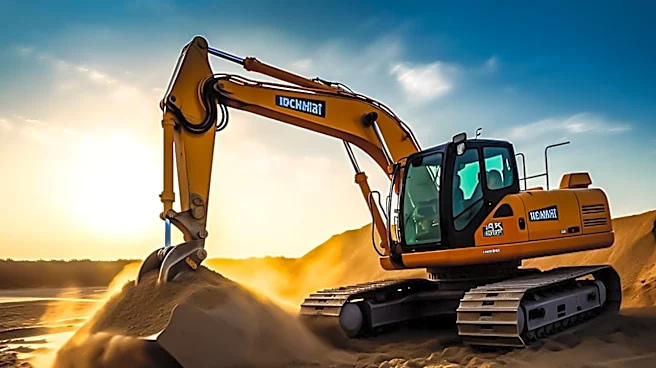
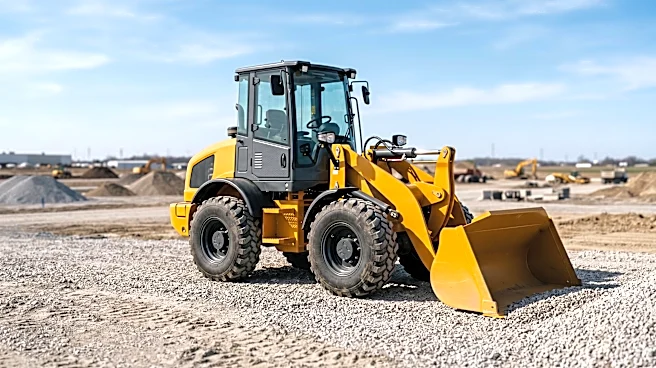
the transaction focuses on three key opportunities: expanding its global business, combining complementary products and technologies, and enhancing aftermarket support. Kobelco is renowned for its hydraulic excavators and cranes, while CNH's construction portfolio includes loaders, graders, dozers, compact track loaders, skid steer loaders, and other equipment. The integration of CNH's established sales and service network, particularly in North America and Latin America, is expected to significantly boost Kobelco's reach. The acquisition also seeks to combine technological advancements, such as Kobelco's K-DIVE® remote operation system and CNH's global navigation satellite system (GNSS) technologies, to develop a wider range of solutions for modern job sites. This move comes as the construction industry faces challenges like labor shortages, increased demand for productivity and safety, and a growing need for advanced technology.
Why It's Important?
This acquisition is significant for the U.S. construction equipment market as it will likely lead to a broader range of solutions and enhanced support for contractors. The combined entity will offer a more comprehensive equipment portfolio, potentially increasing competition and providing U.S. businesses with more diverse options for their construction needs. The strengthening of aftermarket support, including parts availability and technical service, is crucial for U.S. contractors who rely on efficient equipment operation to maintain productivity and minimize downtime. The integration of advanced technologies from both companies could accelerate the adoption of innovative construction solutions in the U.S., addressing challenges such as labor shortages and the need for improved safety. This could benefit U.S. construction companies by offering more technologically advanced and efficient machinery, potentially leading to cost savings and increased operational effectiveness. The expansion of Kobelco's global business, particularly in North America, suggests a renewed focus on the U.S. market, which could translate into better access to equipment and services for American customers.
What's Next?
Following the acquisition, the focus will be on integrating CNH's construction business into Kobelco's operations. This will involve combining product lines, merging sales and service networks, and integrating technological capabilities. U.S. contractors and equipment dealers can anticipate a more unified and expanded offering from the combined entity. Specifics regarding the integration process and the full scope of the new product and service offerings are expected to be announced in due course. The enhanced aftermarket support is a key objective, suggesting that customers can look forward to improved parts availability and technical assistance. The combined technological expertise is likely to lead to the development of new and improved construction equipment, potentially impacting future purchasing decisions for U.S. businesses. The acquisition is also expected to strengthen the global construction equipment organization, with a particular emphasis on expanding sales opportunities in North and Latin America.
Beyond the Headlines
The acquisition reflects a broader trend in the construction industry towards consolidation and technological advancement. As contractors in the U.S. and globally face increasing pressures, equipment manufacturers are seeking to offer more integrated and technologically sophisticated solutions. This move by Kobelco highlights the importance of a comprehensive product portfolio and robust aftermarket support in a competitive market. The emphasis on combining technologies like remote operation and GNSS suggests a future where construction equipment is more connected and automated, potentially leading to significant shifts in how construction projects are managed and executed in the U.S. This could also influence workforce development, requiring new skills for operating and maintaining advanced machinery. The long-term implications include a potential reshaping of market leadership and an acceleration of innovation within the U.S. construction sector, driven by the enhanced capabilities of major players like the newly expanded Kobelco.