



What's Happening?
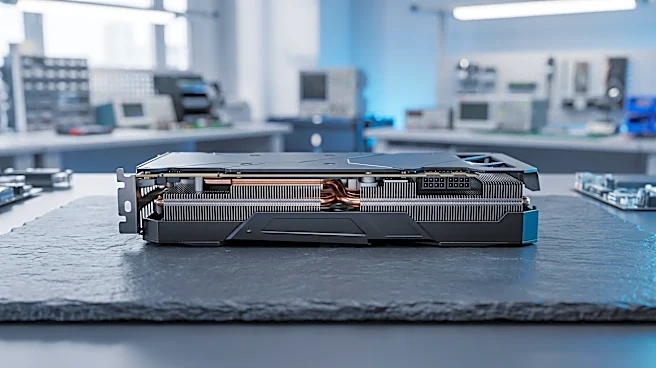
Nvidia's rumored RTX 5080 Super graphics card, initially anticipated for a January 2027 launch with 24GB of video RAM, is now facing a high probability of delay. Taiwanese tech site Benchlife reports that Nvidia's board manufacturing partners have not
yet received design details for the new model, which they expected in October. This delay pushes back the potential release by at least a month, if not more. This development comes as the GPU market experiences significant price hikes across various tiers. TechSpot's October 2026 report indicates that high-end GPUs, such as the RTX 5080, have seen price increases of 39% in the US and 40% in Germany month-on-month, now selling at 120% over MSRP in the US. Even lower-tier GPUs like the RTX 5050 have seen a 35% price increase in the US over the past month, now 68% over MSRP. AMD's Radeon GPUs are also experiencing rapid price increases, with some models up 10% to 30% month-on-month.
Why It's Important?
The potential delay of the RTX 5080 Super, coupled with the ongoing surge in GPU prices, signals a deteriorating situation for consumers and the PC hardware market in the U.S. The significant price increases, affecting both high-end and more affordable graphics cards, make PC upgrades increasingly inaccessible for mainstream buyers. This trend is driven largely by a worsening RAM crisis, which directly impacts video RAM costs. For consumers, this means higher costs for building or upgrading gaming PCs and workstations, potentially stifling demand and innovation in related sectors. For manufacturers and retailers, sustained high prices could lead to reduced sales volumes, despite higher per-unit profits, as the market becomes more constrained by affordability issues. The absence of new, more accessible GPU options further exacerbates the problem, leaving consumers with fewer choices and higher financial burdens.
What's Next?
The immediate future for the GPU market suggests continued price volatility and potential further increases, especially if the RAM crisis persists into 2027. Consumers looking to upgrade may need to consider purchasing GPUs sooner rather than later, as advised by experts, to avoid further price hikes. Nvidia and other GPU manufacturers will likely face pressure to address the supply chain issues contributing to the RAM shortage and subsequent price inflation. The delay of new product releases like the RTX 5080 Super could also lead to a prolonged period without fresh options in the market, potentially impacting competitive dynamics. Industry analysts will closely monitor inventory levels and pricing trends, particularly for mid-range and entry-level GPUs, as these segments are crucial for broader market health and consumer accessibility.
Beyond the Headlines
The current GPU market dynamics highlight broader vulnerabilities within the global technology supply chain, particularly concerning memory components. The escalating costs and product delays could accelerate shifts in consumer behavior, potentially pushing more users towards cloud gaming services or integrated graphics solutions as alternatives to expensive discrete GPUs. This situation also underscores the increasing importance of semiconductor manufacturing capacity and the geopolitical factors that influence it. Long-term, if GPU prices remain elevated, it could impact the growth of PC gaming, professional visualization, and AI development, all of which rely heavily on powerful graphics processing. The industry may need to explore new manufacturing strategies or alternative memory technologies to mitigate future supply shocks and stabilize pricing for consumers.