





What's Happening?
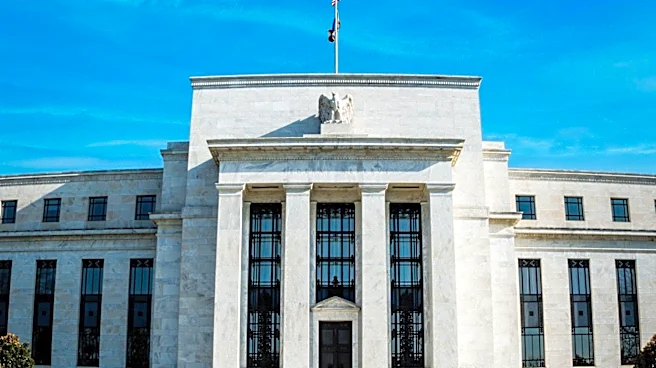
The Federal Reserve's 'Beige Book,' released on November 25, indicates that the U.S. economy experienced modest growth across most districts. This qualitative report, published approximately eight times annually, also highlighted the continued presence
of persistent price pressures. Concurrently, gold prices saw a modest recovery in international markets, approaching $3,650 per ounce, though its near-term outlook remains uncertain due to ongoing inflation, U.S. Treasury yields, and labor market conditions. U.S. 10-year Treasury yields decreased from 2.79% on November 22-23 to 2.73% on November 25, which can generally support non-yielding assets like gold by reducing their opportunity cost. However, FXEmpire senior analyst Christopher Lewis noted that gold's recovery isn't solely attributable to this yield movement. U.S. inflation data presented mixed signals, with the Personal Consumption Expenditures (PCE) price index, the Federal Reserve's preferred inflation gauge, rising 3.8% year-on-year in October. Core PCE inflation also increased by 3.3%, remaining above the Federal Reserve’s 2% target. Additionally, inflation-adjusted consumer spending slightly decreased, suggesting subdued household demand.
Why It's Important?
The Beige Book's findings are crucial for understanding the current state of the U.S. economy and the Federal Reserve's potential monetary policy decisions. Modest economic growth coupled with persistent price pressures suggests that the Federal Reserve may continue to face challenges in achieving its inflation targets without significantly impacting economic expansion. The mixed signals from inflation data, particularly the PCE index remaining above the 2% target, indicate that inflationary pressures are not fully abating, which could influence future interest rate decisions. For investors, the interplay between Treasury yields, inflation, and labor market data creates a complex environment. Lower Treasury yields typically benefit non-yielding assets like gold, but the underlying inflationary concerns and subdued consumer spending introduce volatility. Businesses may face continued cost pressures due to persistent inflation, potentially affecting profitability and investment decisions. The cautious outlook on gold, despite its recent recovery, reflects broader market uncertainty regarding the sustainability of economic trends and the effectiveness of current monetary policies.
What's Next?
Investors will closely monitor upcoming labor market releases for further indications of economic direction. Key data points include October's Job Openings and Labor Turnover Survey (JOLTS) on December 1 and the November employment report on December 4. Weaker hiring figures could reinforce expectations of easing economic conditions, potentially supporting gold prices. Conversely, resilient employment figures combined with persistent inflation might lead to higher and more restrictive interest rates, thereby limiting gold's recovery. FXEmpire senior analyst Christopher Lewis remains cautious about a bullish turn for gold in the immediate future, citing thin trading volumes around the Thanksgiving holiday. He suggests that gold needs another positive weekly close to solidify the case for a sustained recovery. The $3,500 level is identified as an important technical support, with upcoming U.S. economic data expected to determine whether the current rebound in gold prices becomes a stronger, more profound recovery or proves temporary.
Beyond the Headlines
The Federal Reserve's Beige Book, by providing qualitative insights into regional economic conditions, offers a nuanced perspective beyond quantitative data. The report's emphasis on persistent price pressures, even amidst modest growth, highlights the ongoing challenge of inflation management. This situation could lead to a prolonged period of higher interest rates, impacting borrowing costs for consumers and businesses, and potentially slowing down investment and consumption. The subdued household demand, indicated by lower inflation-adjusted consumer spending, suggests that consumers are feeling the pinch of higher prices, which could dampen overall economic activity. The cautious sentiment surrounding gold, despite its traditional role as an inflation hedge, underscores a broader market uncertainty about the efficacy of current economic policies and the potential for stagflationary pressures. The Federal Reserve's balancing act between controlling inflation and supporting economic growth will continue to be a critical factor shaping the U.S. economic landscape, with implications for various sectors and asset classes.