


What's Happening?
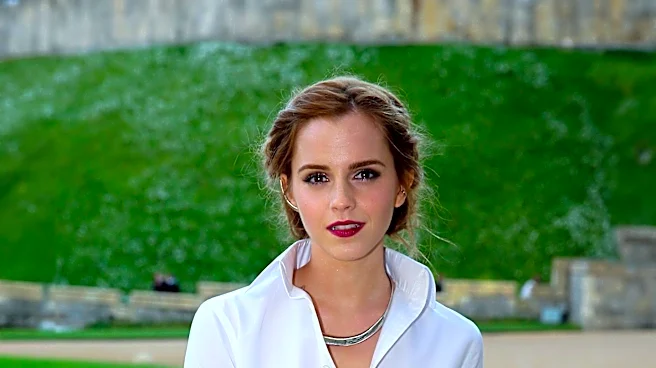
In August 2026, a paparazzi photograph of Emma Watson arriving at George Clooney's villa on Lake Como, Italy, sparked widespread online speculation and meme creation. The image, which showed Watson in a light-colored top carrying a dark tote bag, was
shared on social media with minimal context, leading to a flurry of imaginative interpretations. Users on the internet drew parallels to Watson's roles in films like 'The Bling Ring' and 'This Is the End,' where she played characters involved in breaking into private spaces. The lack of context in the photograph allowed for a variety of narratives to emerge, including humorous suggestions that Watson was there to tutor the Clooney children as her 'Harry Potter' character, Hermione Granger, or to discuss human rights advocacy with Amal Clooney.
Why It's Important?
This incident highlights the power of social media in shaping narratives and the public's fascination with celebrity culture. The rapid spread of memes and speculative stories underscores how quickly information, or the lack thereof, can be transformed into entertainment. It also reflects on the broader societal tendency to fill informational voids with creative storytelling, often blurring the lines between reality and fiction. This phenomenon can impact public perception and demonstrates the influence of digital platforms in constructing and disseminating celebrity narratives.
What's Next?
While the immediate buzz around the photograph may fade, the incident serves as a reminder of the ongoing challenges celebrities face regarding privacy and public scrutiny. It also raises questions about the ethical responsibilities of both media outlets and social media users in handling such content. Future discussions may focus on the balance between public interest and personal privacy, as well as the role of digital platforms in moderating content that can lead to misinformation or unwarranted speculation.
Beyond the Headlines
The event also touches on deeper issues of gender dynamics and media representation. The initial framing of the photograph as 'George Clooney's villa' rather than 'the Clooneys' villa' reflects persistent gender biases in media narratives. Additionally, the varied interpretations of Watson's visit highlight how public figures are often subjected to reductive or stereotypical portrayals based on their past roles or public personas. This incident invites a broader conversation about how media narratives are constructed and the impact they have on societal perceptions of gender and celebrity.