



What's Happening?
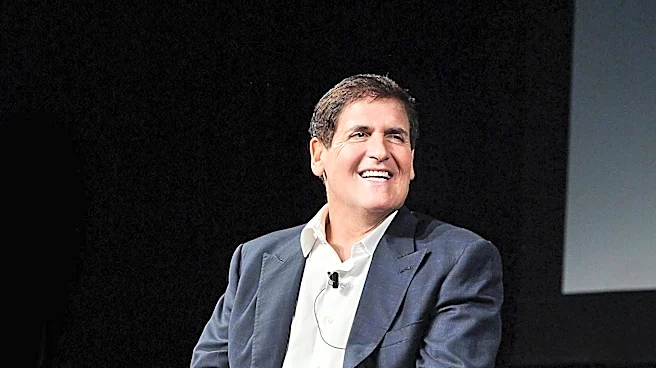
Entrepreneur Mark Cuban has suggested a new approach to address wealth inequality in the U.S.: companies should either offer equity to all employees on a pro-rata basis or face higher corporate taxes. Cuban, known for his role on 'Shark Tank' and his business
ventures, argues that growing income disparity poses a significant risk of unrest and division, which he considers the 'most expensive tax' on businesses. He has personally implemented this philosophy in his past companies, such as Broadcast.com, where 300 employees became millionaires after its acquisition by Yahoo, and MicroSolutions, where he awarded equity and cash bonuses. Cuban believes that aligning the goals and interests of all stakeholders, including employees, leads to greater overall success. He also contends that entrepreneurs determine their acceptable profit margins, and some recognize the community value of taxes, even if a portion doesn't directly reach those in need.
Why It's Important?
This proposal directly addresses the widening wealth gap in the United States, a critical economic and social issue. Federal Reserve data indicates a substantial increase in assets held by the top 0.1% compared to the bottom 50% over the past decade, with the top 0.1% owning $25.07 trillion in Q1 2026, while the bottom 50% own $4.27 trillion. Cuban's suggestion could significantly impact corporate compensation structures and tax policies. If implemented, it could lead to a redistribution of wealth, potentially empowering a broader segment of the workforce through stock ownership. This could foster greater employee loyalty and motivation, as seen in companies like Nvidia, where key executives have become billionaires due to their stock holdings. However, it also raises questions about the potential for increased costs for businesses and whether these costs would be passed on to consumers, potentially exacerbating inflation for those without company stock benefits.
What's Next?
Cuban's proposal, shared on X, is currently a conceptual framework rather than an impending policy. Its future depends on gaining traction among policymakers, business leaders, and the public. The debate around wealth inequality is ongoing, particularly with the rise of AI-driven wealth creation. Discussions will likely continue regarding the most effective mechanisms to ensure equitable distribution of economic gains. Potential next steps could involve further public discourse, academic studies on the economic impact of such policies, or advocacy by business leaders and labor organizations. The idea could influence future legislative proposals aimed at corporate tax reform or employee ownership incentives. The reaction from various stakeholders, including large corporations, small businesses, and labor unions, will be crucial in determining if this concept moves from discussion to potential policy consideration.
Beyond the Headlines
Cuban's proposition delves into the fundamental ethical and societal responsibilities of corporations in a capitalist system. It challenges the traditional model where wealth generation primarily benefits founders and top executives, advocating for a more inclusive distribution of prosperity. This initiative could spark a broader conversation about corporate governance, stakeholder capitalism, and the role of businesses in addressing societal challenges beyond profit maximization. The long-term implications could include a shift in corporate culture towards greater transparency and employee empowerment, potentially leading to a more stable and equitable economic landscape. It also highlights the tension between individual entrepreneurial freedom and collective societal well-being, suggesting that unchecked wealth disparity can undermine social cohesion and economic stability, ultimately imposing a hidden 'tax' on all businesses through social unrest and division.