



What's Happening?
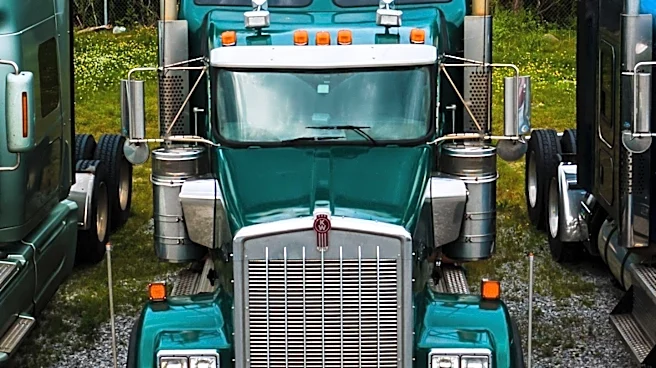
A truck driver in Charlotte was billed $9,000 in towing and impound fees after his semi-truck exceeded a free parking limit by just 30 minutes. The vehicle was towed from a lot off Sunset Road during a historic snowstorm, while the area was under a state
of emergency. The itemized bill included $7,000 for impound and towing, $500 for vehicle storage, and a $1,500 gate administrative fee. Truck driver Donald Hicklin Jr. expressed shock and frustration, describing the charges as 'beyond excessive' and 'predatory.' North Carolina state law currently does not set maximum allowable rates for nonconsensual private property towing, allowing towing companies to determine their own pricing structures. This lack of regulation means North Carolina is not among the 12 states that cap heavy-duty tow rates for such situations.
Why It's Important?
This incident highlights a significant issue regarding unregulated towing fees in North Carolina, which can disproportionately impact individuals and businesses, particularly in the trucking industry. The exorbitant charges for a minor parking violation, especially during a state of emergency, raise concerns about consumer protection and fair business practices. Unregulated fees can lead to financial hardship for truck drivers, who are essential to the supply chain and economy. Charlotte City Councilwoman At-Large Dimple Ajmera has acknowledged receiving multiple complaints about private towing practices, indicating a broader problem affecting the community. The situation underscores the need for legislative action to establish reasonable limits on towing and impound fees to prevent predatory practices and protect consumers from exploitation.
What's Next?
Charlotte City Councilwoman At-Large Dimple Ajmera is working with city staff to evaluate potential municipal measures to address unregulated towing fees. These measures could include creating a system to refer repeat predatory towing offenders to the North Carolina Attorney General’s Office and increasing financial penalties for violations. For drivers like Donald Hicklin Jr., legal recourse often involves claims under statutes prohibiting unfair or deceptive trade practices, requiring proof of unfair conduct, involvement in commerce, and specific financial injury. If successful, court awards can be multiplied by three under applicable law. This incident may also spur state-level discussions and legislative efforts to regulate towing fees, potentially bringing North Carolina in line with other states that have established maximum rates for nonconsensual private property tows.
Beyond the Headlines
The case of the $9,000 towing bill exposes a systemic vulnerability in consumer protection laws, particularly in sectors where services are often rendered under duress or without explicit consent, such as nonconsensual towing. This lack of regulation can create an environment ripe for exploitation, where companies can impose arbitrary and excessive charges. Beyond the immediate financial burden on individuals, such practices can erode public trust in local businesses and regulatory bodies. It also raises ethical questions about profiteering during emergencies, as the towing occurred amidst a snowstorm. The broader implication is a call for greater governmental oversight to balance property owners' rights with consumer fairness, ensuring that essential services do not become avenues for predatory pricing.