



What's Happening?
Jacquard, an intricate weaving system invented in 1801, is gaining prominence as a significant fabric trend for the fall season, following the summer's focus on taffeta. This fabric, which includes brocade, is characterized by its heavy, complex, and
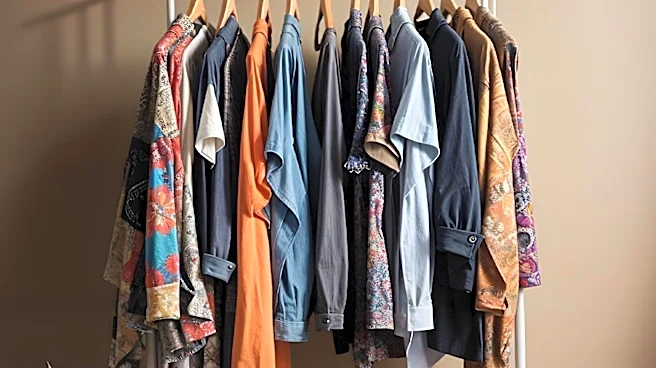
often lustrous appearance, lending a decorative quality to garments. Designers such as Dries Van Noten and Anna Sui prominently featured jacquard in their fall/winter collections. Dries Van Noten showcased the texture in various forms, from high-drama coats to subtle trims, while Anna Sui presented head-to-toe brocade ensembles, including matching jackets, pants, and handbags. Etro also contributed to the trend with elegant longline coats. Fashion experts suggest that while jacquard is traditionally associated with evening wear, it can be styled effectively for daytime looks, balancing its boldness with tailored pieces like button-down shirts and blazers.
Why It's Important?
The resurgence of jacquard fabric as a key trend has several implications for the U.S. fashion industry and consumers. It signifies a shift in material preferences, moving towards richer, more textured fabrics for cooler weather, which can influence manufacturing and retail strategies. For designers, embracing jacquard offers an opportunity to showcase craftsmanship and create distinctive, luxurious pieces that stand out in the market. Consumers, in turn, are presented with new aesthetic choices that can elevate their fall wardrobes, potentially driving sales in the luxury and contemporary fashion segments. The versatility of jacquard, allowing for both evening and daytime wear, broadens its appeal and market penetration. This trend also highlights the cyclical nature of fashion, where historical fabrics are reinterpreted for modern tastes, influencing design directions and consumer demand for unique textiles.
What's Next?
As jacquard gains traction, fashion retailers and brands are likely to increase their offerings of garments featuring this fabric. Consumers can expect to see a wider variety of jacquard pieces, including blazers, trousers, skirts, and accessories, across different price points. Fashion stylists and influencers will continue to demonstrate ways to incorporate jacquard into everyday and special occasion outfits, further solidifying its presence in seasonal wardrobes. The trend may also inspire textile manufacturers to innovate with jacquard weaving techniques, potentially leading to new patterns, textures, and material blends. Designers for upcoming seasons might explore different applications of jacquard, pushing its boundaries beyond traditional interpretations, and potentially influencing broader interior design and home decor trends as well.
Beyond the Headlines
The embrace of jacquard fabric goes beyond mere seasonal fashion; it reflects a broader appreciation for artisanal craftsmanship and historical textiles in an era often dominated by mass production. The intricate nature of jacquard weaving, which requires specialized looms and techniques, connects consumers to a rich heritage of textile artistry. This trend could signal a growing desire for clothing with a sense of history and unique character, moving away from more minimalist or utilitarian styles. Furthermore, the ability to style jacquard for both day and night suggests a consumer preference for versatile, investment pieces that offer longevity and adaptability. This shift might encourage more thoughtful consumption, where quality and design heritage are valued over fleeting trends, potentially influencing sustainable practices within the fashion industry by promoting durable, well-crafted garments.