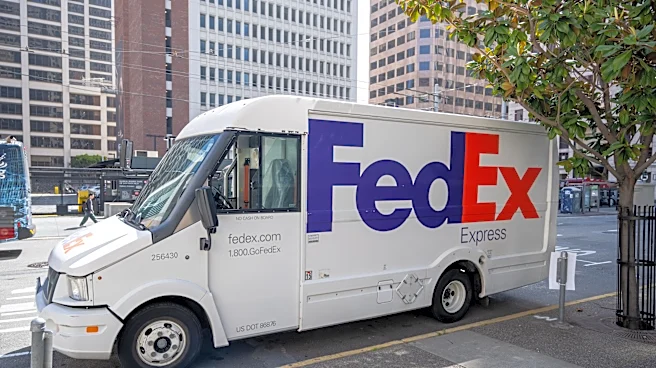

What's Happening?
FedEx Office, formerly known as Kinko's, has transformed into a comprehensive retail network that integrates digital document management, professional printing, and global logistics. Kinko's, founded in 1970,
was acquired by FedEx in 2004 for $2.4 billion, a strategic move to compete with UPS's acquisition of Mail Boxes Etc. Initially rebranded as "FedEx Kinko's," the company fully transitioned to "FedEx Office" in 2008, merging its printing centers with FedEx's shipping network. Modern FedEx Office locations provide a range of services, including professional printing for marketing materials and large formats, finishing services, and packing and shipping solutions. They also offer technical and administrative support such as self-service computer stations, secure shredding, passport photo services, and faxing/scanning. These centers aim to be a one-stop shop for businesses and individuals, bridging the gap between physical document production and global delivery.
Why It's Important?
The evolution of Kinko's into FedEx Office signifies a critical strategic adaptation within the U.S. business services sector, particularly in response to changing consumer and business needs. By integrating printing, document management, and global shipping under one roof, FedEx Office addresses the demand for streamlined, efficient solutions for small businesses, remote workers, and individuals. This consolidation of services enhances convenience and potentially reduces operational complexities for users, offering a competitive edge against standalone printing shops or shipping centers. The move also reflects a broader trend in retail towards multi-service hubs, impacting how U.S. consumers access essential business and logistical support. For FedEx, it strengthens its market position by offering a comprehensive suite of services that leverages its existing transportation infrastructure, potentially increasing customer loyalty and market share.
What's Next?
FedEx Office is expected to continue refining its integrated service model, potentially expanding its digital offerings and self-service options to meet evolving customer demands. The company may also explore further technological integrations to enhance the customer experience, such as advanced online portals for order submission and tracking. Given the increasing prevalence of remote work and small businesses, FedEx Office will likely focus on catering to these segments with tailored solutions and flexible service models. The ongoing competition with rivals like The UPS Store will drive continuous innovation in service delivery and pricing strategies, ensuring that FedEx Office remains a relevant and competitive player in the U.S. market for printing, packing, and shipping services.
Beyond the Headlines
The transformation of Kinko's into FedEx Office illustrates a significant shift in the retail landscape, where traditional service providers must adapt to offer integrated, technology-driven solutions. This evolution highlights the importance of strategic acquisitions and rebranding in maintaining market relevance and competitiveness. Beyond its business implications, FedEx Office's role as a 'one-stop shop' reflects a societal need for convenience and efficiency in managing both digital and physical documents and logistics. It also underscores the enduring importance of physical retail spaces in an increasingly digital world, serving as essential hubs for tasks that still require in-person interaction or specialized equipment, thereby impacting local economies and community access to vital business resources.