





What's Happening?
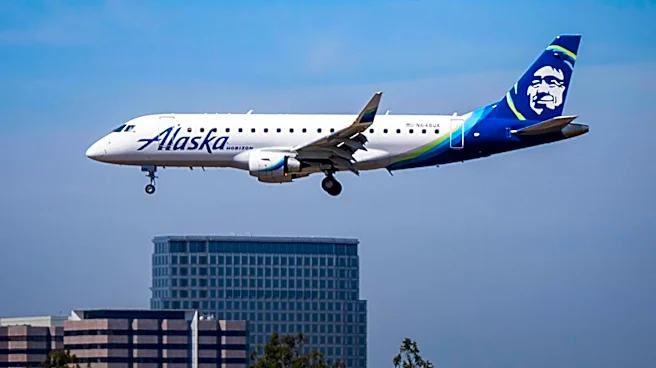
Alaska Airlines has initiated a quiet partnership with Breeze Airways, allowing Alaska to sell selected Breeze flights and award Atmos Rewards points for them. This arrangement, confirmed by Alaska Airlines as an interline agreement, is currently limited
to specific Breeze flights touching Charleston (CHS), Las Vegas (LAS), and Raleigh-Durham (RDU). The available flights appear to be for destinations not currently served by Alaska Airlines. While customers can earn Atmos Rewards points when booking these selected Breeze flights directly through Alaska Airlines (with ticket numbers starting in 027), there are no reciprocal elite benefits, Breeze award redemptions via Atmos, or seamless connections between the two carriers at this stage. The partnership aims to help Alaska Airlines expand its presence on the East Coast, addressing a geographical gap in its network.
Why It's Important?
This partnership is significant for Alaska Airlines as it represents a strategic move to enhance its East Coast presence without the complexities and costs of a merger or direct acquisition. By leveraging Breeze Airways' network, Alaska can offer its loyal customers more travel options in regions it doesn't extensively serve, such as Hartford, Providence, Charleston, Norfolk, and Raleigh-Durham. This expansion allows Alaska to become a more competitive alternative to larger carriers like American, Delta, and United, providing a more comprehensive network for travelers across the U.S. For Breeze Airways, the partnership introduces its services to Alaska's customer base, potentially increasing its passenger volume and brand recognition. If the collaboration evolves to include connecting itineraries and reciprocal loyalty benefits, it could create a stronger, more integrated travel experience for passengers and a more robust competitive landscape in the U.S. domestic market.
What's Next?
The current arrangement is limited, but there is potential for a deeper partnership between Alaska Airlines and Breeze Airways. Future developments could include the introduction of connecting itineraries, allowing passengers to seamlessly transfer between the two airlines. Reciprocal elite benefits for loyalty program members might also be considered, enhancing the value proposition for frequent flyers. The success of this initial, smaller arrangement will likely determine the extent of future collaboration. Both carriers will be observing whether working together generates new business that they would not have otherwise captured. While a merger is not indicated, a closer relationship could allow Alaska to expand its reach without the significant expense and disruption of an acquisition, potentially offering a model for other airlines seeking to grow their networks strategically.
Beyond the Headlines
This quiet partnership between Alaska Airlines and Breeze Airways highlights a growing trend in the U.S. airline industry: smaller, strategic alliances designed to fill network gaps and enhance competitiveness without full-scale mergers. In an environment where consolidation has been a dominant theme, such interline agreements offer a more agile approach to market expansion. This strategy allows airlines to test the waters of collaboration, assess mutual benefits, and adapt to evolving market demands. It also underscores the importance of regional carriers like Breeze in providing feeder traffic and expanding reach for larger airlines. The ethical implication lies in ensuring that such partnerships genuinely benefit consumers through increased options and convenience, rather than merely consolidating market power. This model could lead to a more fragmented yet interconnected airline landscape, where specialized carriers play crucial roles in broader network strategies.