








What's Happening?
Two U.S. commercial shrimpers have filed a complaint with the U.S. International Trade Commission (ITC) under Section 337 of the Tariff Act of 1930. The complaint alleges that Nekkanti Sea Foods, a major Indian seafood producer, utilizes forced labor
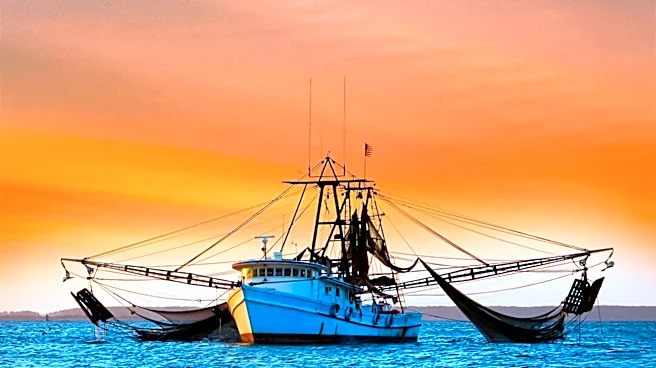
in its supply chains, constituting an unfair trade practice. India is a significant supplier of shrimp to the U.S. market, accounting for over half of all peeled shrimp and 40% of all frozen warmwater shrimp imported in 2025. The ITC has previously found that the U.S. shrimp industry has been harmed by Indian shrimp companies due to dumping and government subsidies. However, these existing trade remedies do not address the issue of forced labor, which the U.S. shrimpers argue creates unfair competition and leads to lost sales in the U.S. market. The complaint highlights that Indian shrimp prices have fallen to record lows, causing the U.S. shrimp industry to lose half its value between 2021 and 2023, leading to numerous closures of American shrimping businesses.
Why It's Important?
This complaint is significant because it directly challenges the competitive landscape of the U.S. shrimp market, which has been severely impacted by foreign imports. The alleged use of forced labor by a major Indian producer not only raises ethical concerns but also creates an uneven playing field for U.S. shrimpers who adhere to fair labor practices. The decline in the U.S. shrimp industry, evidenced by the loss of half its value and a drastic reduction in commercial shrimp licenses, threatens domestic food security and the livelihoods of multigenerational shrimping families. If the ITC initiates an investigation and finds in favor of the U.S. shrimpers, it could lead to import restrictions or other trade remedies against Indian shrimp produced with forced labor, potentially stabilizing prices and improving market conditions for domestic producers. This case also underscores the broader issue of human rights in global supply chains and the responsibility of importing nations to address such practices.
What's Next?
The ITC Commissioners are expected to decide within 30 calendar days (by November 27, 2026) whether to initiate the case and outline the procedural next steps. Following this decision, an eight-day public comment period will commence after the complaint's publication in the Federal Register. If the ITC decides to proceed, a formal investigation will be launched, which could involve extensive evidence gathering and hearings. The outcome could range from a finding of no violation to the issuance of exclusion orders preventing the import of shrimp from Nekkanti Sea Foods, or even broader remedies if systemic issues are identified. This action could also prompt other U.S. agencies, such as the Department of Labor and the Food and Drug Administration, to re-evaluate their oversight of imported seafood supply chains for labor practices. The case may also encourage other countries to scrutinize their own import policies regarding goods produced with forced labor.
Beyond the Headlines
This complaint extends beyond immediate trade disputes, touching upon complex ethical and economic dimensions of global commerce. The alleged use of forced labor in the shrimp industry highlights the challenges of ensuring ethical sourcing in complex international supply chains. It also brings to the forefront the tension between consumer demand for affordable goods and the human cost of their production. A successful outcome for the U.S. shrimpers could set a precedent for future trade complaints based on forced labor allegations, potentially influencing corporate accountability standards and consumer awareness regarding the origins of their food. Furthermore, it could spur a broader re-evaluation of trade policies to more effectively integrate human rights considerations, moving beyond traditional concerns of dumping and subsidies to address labor exploitation as a critical unfair trade practice. This could lead to long-term shifts in how international trade agreements are negotiated and enforced, prioritizing social responsibility alongside economic competitiveness.