




What's Happening?
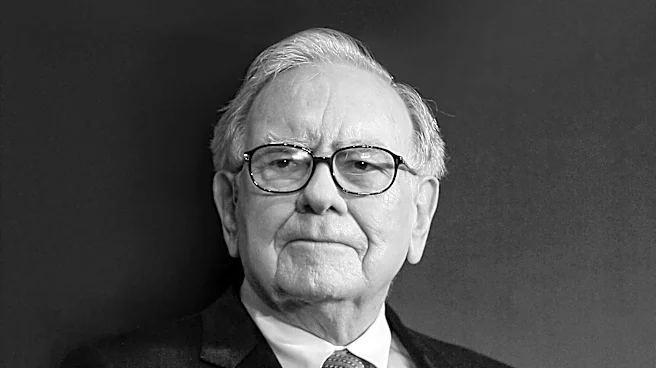
Warren Buffett, Chairman of Berkshire Hathaway, has donated more than $60 billion worth of Berkshire Hathaway stock over two decades without incurring capital gains tax. These donations were made under Internal Revenue Code Section 170, which allows for
charitable deductions. This provision treats a gift of stock as distinct from a sale, meaning no capital gain is recognized by the donor. In 2026, Buffett's gifts were directed entirely to four family-linked foundations, excluding the Gates Foundation for the first time. He has stated his intention to divest all his Berkshire shares within approximately eight years. As of May 26, 2026, Buffett still held 196,290 Class A shares. The tax code allows for deductions based on fair market value for shares held over one year, with specific rules for gifts to private foundations, including a carve-out for 'qualified appreciated stock' that is publicly traded.
Why It's Important?
This strategy highlights a significant aspect of U.S. tax law that allows wealthy individuals to make substantial charitable contributions while avoiding capital gains taxes on highly appreciated assets. For donors like Buffett, whose stock gifts far exceed their annual income, the primary benefit is that the capital gain is never reported. This approach can significantly reduce the tax burden on large estates, as lifetime charitable giving also lowers the future taxable estate. The rules surrounding Section 170, particularly concerning public charities versus private foundations and percentage caps on deductions, influence how such large-scale philanthropy is structured. This method primarily benefits concentrated holders of low-basis stock who are already committed to charitable giving, offering a tax-efficient way to transfer wealth to philanthropic causes.
What's Next?
Warren Buffett plans to dispose of all his remaining Berkshire Hathaway shares within the next eight years, indicating that more large-scale stock donations are anticipated. These future transfers are expected to follow the same tax-efficient strategy, utilizing Section 170 of the Internal Revenue Code. The continued use of family-linked foundations for these donations suggests a sustained focus on specific philanthropic endeavors aligned with his family's interests. The implications for the philanthropic sector include the potential for significant capital infusions into these foundations, enabling them to expand their activities. For the broader financial community, Buffett's ongoing divestment will be watched as a model for tax-efficient wealth transfer and charitable giving among ultra-high-net-worth individuals.
Beyond the Headlines
The practice of donating highly appreciated stock to charity without paying capital gains tax raises broader discussions about wealth distribution, tax policy, and philanthropic influence. While legally permissible and encouraging charitable giving, it also highlights how existing tax structures can allow substantial wealth to be transferred without contributing to government revenue through capital gains taxes. This mechanism can be seen as a powerful incentive for philanthropy, but it also sparks debate about tax fairness and the role of private foundations in public welfare. The ability to direct billions to family-linked foundations rather than broader public charities, as seen with the exclusion of the Gates Foundation in 2026, also underscores the significant control wealthy donors retain over the deployment of their philanthropic capital.