





What's Happening?
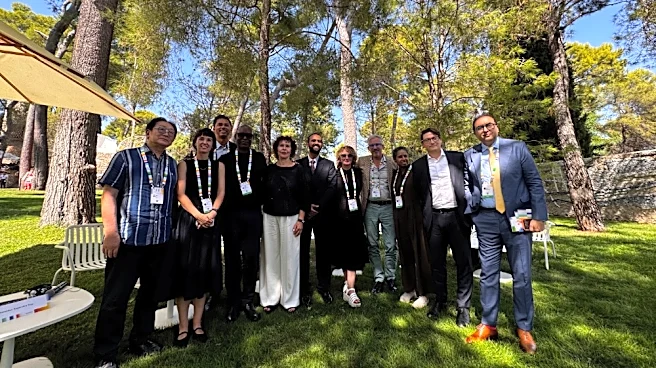
QNu Labs has announced a strategic partnership with SAGA Consultants, a prominent quantum-safe system integrator based in France. This collaboration marks QNu Labs' initial significant channel partnership in Europe, signaling a key step in its international
expansion strategy. Through this alliance, SAGA Consultants will now be able to offer QNu Labs' comprehensive quantum-safe security suite, which includes QShield, ARMOS QKD, and Hodos PQC, to both enterprise and government clients across Europe. The partnership is framed within the context of evolving EU regulatory mandates such as DORA, NIS2, and EuroQCI, highlighting the increasing demand for robust quantum-safe security solutions. QNu Labs positions itself as a global provider of quantum-safe security, leveraging technology developed in India for worldwide deployment. This move aims to address the growing need for advanced cybersecurity measures in an era of quantum computing advancements.
Why It's Important?
This partnership is significant for the U.S. and global cybersecurity landscape as it underscores the accelerating international adoption of quantum-safe security technologies. While QNu Labs is an Indian company and SAGA Consultants is French, the expansion of such advanced security solutions in Europe sets a precedent and influences global standards for data protection. The increasing regulatory pressure in the EU, exemplified by DORA, NIS2, and EuroQCI, reflects a worldwide trend towards mandating stronger cybersecurity protocols, which will inevitably impact U.S. companies operating internationally or dealing with European partners. The 'harvest-now-decrypt-later' threat, where encrypted data is collected today with the expectation of future decryption by quantum computers, makes the deployment of quantum-safe solutions critical. This collaboration demonstrates a proactive approach to mitigating these future risks, potentially influencing U.S. policy and corporate strategies regarding quantum cybersecurity investments and international data security frameworks. U.S. businesses and government agencies will need to monitor these developments to ensure interoperability and compliance with evolving global security standards.
What's Next?
Following this partnership, QNu Labs and SAGA Consultants are expected to focus on integrating and deploying QNu's quantum-safe security stack across European enterprises and government entities. This will likely involve targeted outreach and implementation projects to meet the specific security requirements of various sectors, particularly those impacted by EU regulatory mandates like DORA and NIS2. The success of these deployments could lead to further expansion of QNu Labs' presence in other European markets and potentially influence the adoption of similar quantum-safe solutions globally. Major stakeholders, including European governments and critical infrastructure operators, will be closely observing the effectiveness and scalability of these technologies. For the U.S., this development could accelerate discussions around national quantum cybersecurity strategies and the need for robust post-quantum cryptography standards. It may also prompt U.S. companies to evaluate their own quantum readiness and consider partnerships with providers of quantum-safe solutions to secure their international operations and data.
Beyond the Headlines
The partnership between QNu Labs and SAGA Consultants highlights a deeper, less obvious implication: the global race to establish dominance in quantum-safe cybersecurity. As quantum computing capabilities advance, the threat to current encryption methods becomes more pronounced, creating an urgent need for new security paradigms. This collaboration signifies a strategic move to secure critical infrastructure and sensitive data against future quantum attacks, reflecting a growing awareness that cybersecurity is no longer just about current threats but also about anticipating and neutralizing future ones. Ethically, the deployment of quantum-safe solutions raises questions about data sovereignty and the balance between national security interests and global interoperability of secure communication. Culturally, it represents a shift in how organizations perceive and invest in cybersecurity, moving from reactive measures to proactive, future-proof strategies. The long-term shift could see quantum-safe security becoming a fundamental requirement for all digital transactions and communications, fundamentally altering the landscape of global data protection and trust in digital systems.