




What's Happening?
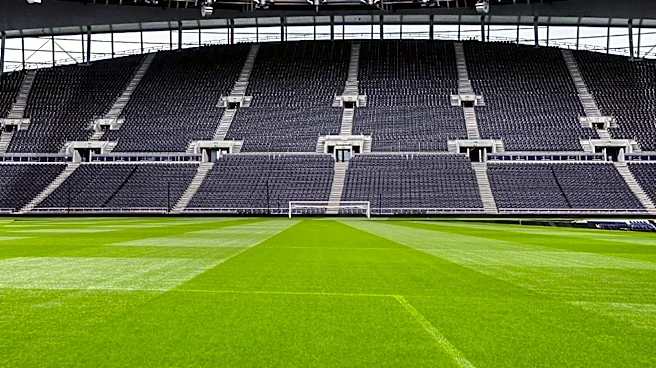
Hewlett Packard Enterprise (HPE) has completed a multi-million-dollar technology upgrade at Tottenham Hotspur Stadium in London, integrating Wi-Fi 7 and AI capabilities. This initiative, seven years after HPE became the stadium's technology partner, involves
replacing approximately 1,800 access points to support stadium-wide Wi-Fi 7, making it one of the first stadiums globally to adopt this technology. The upgrade is primarily driven by the increasing connectivity demands of stadium visitors and operations. Additionally, Tottenham Hotspur Football Club is replacing Broadcom-owned VMware with HPE's Morpheus, OpsRamp, and VME (VM Essentials) for IT operations, aiming for improved efficiency and cost savings. Rob Pickering, the chief technology officer of Tottenham Hotspur Football Club, stated that Wi-Fi serves the vast majority of their use cases for fan connectivity and underpins all operational activities.
Why It's Important?
This technological overhaul at a major sports venue highlights a significant trend in infrastructure development, prioritizing advanced Wi-Fi over 5G for large-scale public connectivity. While 5G receives considerable attention in U.S. stadium settings, Tottenham's decision to invest heavily in Wi-Fi 7 demonstrates its enduring appeal and capability to meet high-bandwidth demands. The move away from VMware by a prominent client like Tottenham Hotspur could signal a broader shift in the enterprise software market, potentially impacting Broadcom's market share and benefiting HPE's competitive offerings. The integration of AI for IT operations (AIOps) also underscores the growing importance of artificial intelligence in managing complex network resources, performing predictive maintenance, and enhancing operational efficiency in large-scale environments, setting a precedent for other venues and businesses.
What's Next?
The full implementation of Wi-Fi 7 at Tottenham Hotspur Stadium is expected within the next month, positioning it as a global leader in stadium connectivity. This upgrade will likely serve as a case study for other sports venues and large public spaces considering similar technological advancements. HPE's success in replacing VMware at Tottenham could encourage other organizations to evaluate their existing IT infrastructure and consider HPE's alternative solutions, potentially leading to increased competition in the enterprise software market. The ongoing development of AI for IT operations will likely see further integration and refinement, with potential for more sophisticated predictive maintenance and resource management across various industries. The long-term impact on fan experience and operational efficiency at the stadium will be closely monitored.
Beyond the Headlines
The strategic choice of Wi-Fi 7 over private 5G for primary fan connectivity at Tottenham Hotspur Stadium challenges the prevailing narrative that 5G is the ultimate solution for all high-density public environments. This decision suggests that for certain use cases, advanced Wi-Fi technologies can offer a more cost-effective and equally robust solution. The displacement of VMware by HPE's offerings also reflects a broader industry trend of companies seeking more tailored and potentially less costly alternatives to established enterprise software providers, especially in the wake of significant acquisitions and changes in licensing models. This shift could foster greater innovation and competition among technology providers, ultimately benefiting consumers and businesses through more diverse and efficient solutions. The emphasis on AI for operational management also points to a future where intelligent systems play a critical role in maintaining complex infrastructures.