
What's Happening?
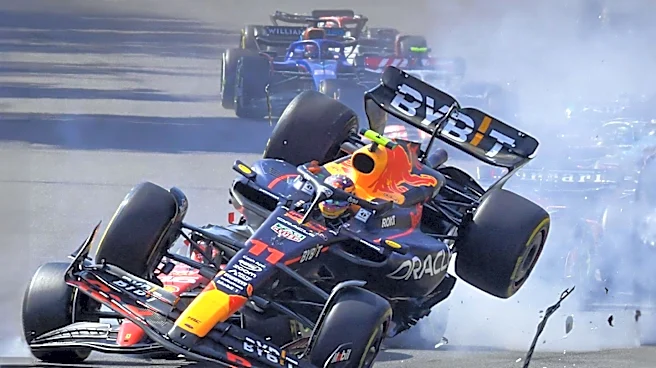
The FIA has responded to criticisms regarding the challenges faced with the 2026 Formula 1 rules, attributing the issues to resistance from manufacturers. Drivers have expressed dissatisfaction with the energy management problems experienced during races,
particularly at the Belgian Grand Prix. The FIA's single-seater director, Nikolas Tombazis, stated that while the governing body anticipated potential issues, their efforts to implement rule changes were hindered by the governance process requiring manufacturer support. A Power Unit Advisory Committee was established to ensure fair regulations for both current and new manufacturers, but this framework also limited the FIA's ability to make unilateral changes. Despite these challenges, the FIA has introduced emergency measures to improve energy management and plans to adjust the power split between internal combustion engines and battery power by 2028.
Why It's Important?
The situation highlights the complexities of governance and regulation in Formula 1, where balancing the interests of various stakeholders is crucial. The resistance from manufacturers underscores the challenges in achieving consensus on rule changes, which can impact the sport's competitiveness and sustainability. The FIA's ability to navigate these challenges is essential for maintaining the integrity and excitement of Formula 1. The ongoing dialogue between the FIA, manufacturers, and drivers is critical for addressing current issues and ensuring the sport's future development aligns with technological advancements and environmental considerations.
What's Next?
The FIA will continue to work with manufacturers and other stakeholders to refine the 2026 regulations and address the current challenges. The planned shift in power distribution by 2028 indicates a long-term strategy to enhance the sport's sustainability and performance. Ongoing discussions and potential rule adjustments will be necessary to ensure that the interests of all parties are balanced and that the sport remains competitive and engaging for fans. The outcome of these efforts will influence the future direction of Formula 1 and its ability to adapt to evolving technological and environmental demands.