





What's Happening?
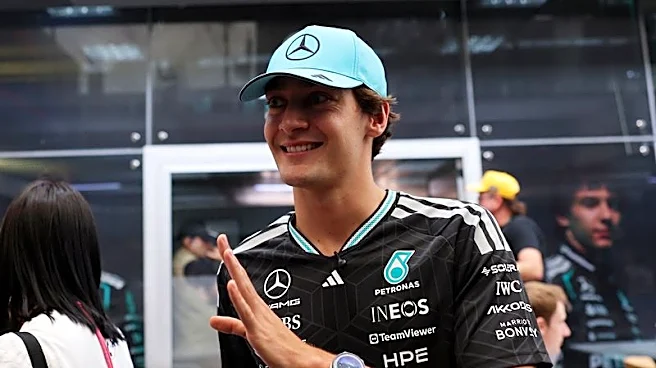
George Russell, a Mercedes driver, will incur a five-place grid penalty at the upcoming São Paulo Grand Prix. This penalty stems from Mercedes' decision to replace the internal combustion engine (ICE) in his car. The engine change is a standard replacement,
utilizing a unit from the car's seasonal hardware allocation that matches its previously homologated specifications. This type of ICE change involves replacing the V6 block and its core mechanical components, including cylinder heads, pistons, crankshaft, and valvetrain. Other elements like the turbocharger or motor generator units can be retained separately. Formula 1 regulations dictate that exceeding a driver's seasonal allocation of any power unit element automatically results in a grid penalty as part of the sport's cost-containment rules. Russell acknowledged the penalty, stating that it was anticipated at some point between the Singapore Grand Prix and the end of the season, and the team deemed São Paulo a suitable location for the change.
Why It's Important?
This grid penalty significantly impacts George Russell's starting position and race strategy for the São Paulo Grand Prix, potentially hindering his ability to compete for top positions. For Mercedes, the decision to change the ICE suggests a strategic move to ensure optimal performance or address potential reliability concerns with the existing unit, even at the cost of a grid penalty. Such decisions are crucial in the competitive environment of Formula 1, where every point matters for both driver and constructor championships. The penalty also adds an element of challenge and excitement to the race, as Russell will need to demonstrate strong overtaking skills to recover positions, reminiscent of past performances by other drivers who overcame similar penalties at the same venue. This situation highlights the delicate balance teams must strike between performance optimization and adherence to stringent technical regulations.
What's Next?
Following the five-place grid penalty, George Russell will start the São Paulo Grand Prix five positions lower than where he qualifies. His immediate focus will be on maximizing his performance during qualifying to secure the best possible starting position, even with the impending penalty. During the race, Russell will aim to emulate past successful recovery drives seen at Interlagos, such as Lewis Hamilton's performance in 2021, where he overcame a significant grid penalty to win. The Mercedes team will likely strategize to optimize pit stops and tire management to aid Russell's charge through the field. The outcome of his race will be closely watched to see how effectively he can mitigate the impact of the penalty and whether Mercedes' decision to change the engine proves beneficial in the long run for performance or reliability.
Beyond the Headlines
The imposition of grid penalties for exceeding power unit component allocations underscores Formula 1's commitment to cost control and promoting engine reliability across the season. These regulations aim to prevent teams from constantly introducing new components, which would escalate costs and potentially create a performance disparity. While penalties can be frustrating for drivers and fans, they force teams to make strategic decisions about engine management throughout the year, adding another layer of tactical complexity to the sport. The choice of São Paulo for this penalty might also reflect a calculated risk by Mercedes, perhaps viewing the circuit as one where overtaking is more feasible, thus offering a better chance for Russell to recover positions compared to other tracks. This incident highlights the intricate interplay between technical regulations, team strategy, and driver performance in modern Formula 1.