


What's Happening?
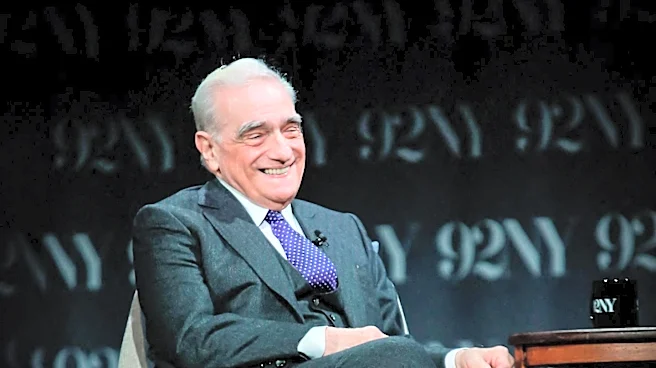
Oscar-winning director Martin Scorsese has stated that Seth Rogen's 2014 film 'The Interview' was responsible for the cancellation of his planned 'Cleopatra' feature film. According to Scorsese, the widespread Sony Pictures hack, which was a response
to 'The Interview,' 'ruined everything' for his project. Scorsese revealed that he was prepared to direct Angelina Jolie as Cleopatra VII, with the script ready for production. He recounted the situation to his daughter, Francesca Scorsese, on Tribeca’s Crafty, explaining that North Korean leader Kim Jong Un's negative reaction to being satirized in Rogen's film led to the significant cyberattack on Sony, which subsequently derailed his 'Cleopatra' movie. Scorsese humorously remarked that Kim Jong Un 'doesn’t have a sense of humor,' implying this was the root cause of the project's demise. 'The Interview,' co-written and directed by Rogen and Evan Goldberg, depicted a plot by the CIA to assassinate Kim Jong Un, portrayed by Randall Park, during a celebrity interview.
Why It's Important?
This revelation highlights the far-reaching and unexpected consequences of geopolitical events on the entertainment industry. The Sony Pictures hack, a state-sponsored cyberattack, not only caused significant financial damage and exposed sensitive corporate data but also had a direct impact on creative projects in Hollywood. Scorsese's account underscores how international political tensions and reactions can indirectly influence artistic endeavors, leading to the abandonment of major film productions with significant talent attached. The cancellation of a film like 'Cleopatra,' with a director of Scorsese's caliber and a star like Angelina Jolie, represents a substantial loss for cinematic history and potential cultural impact. It also serves as a reminder of the vulnerabilities of major studios to cyber warfare and the ripple effects such incidents can have across various sectors, including creative arts and global diplomacy.
What's Next?
While Scorsese and Rogen have since collaborated, with Scorsese even appearing in Rogen's Apple TV series 'The Studio,' the 'Cleopatra' project remains unmade. There are no indications from the source that Scorsese plans to revive the 'Cleopatra' film in the near future, nor is there any suggestion of a direct reconciliation or further discussion between Scorsese and Rogen regarding the past incident. The entertainment industry continues to grapple with cybersecurity threats, and studios have likely implemented more robust security measures since the 2014 hack. However, the incident serves as a historical case study of how external geopolitical factors can unexpectedly disrupt major film productions. Future projects involving sensitive political themes may face increased scrutiny or security considerations from studios aiming to avoid similar international incidents and their costly repercussions.
Beyond the Headlines
The incident transcends a simple film cancellation, touching upon broader themes of artistic freedom, geopolitical influence on media, and the unintended consequences of satire. 'The Interview' sparked a debate about the role of comedy in international relations and the potential for artistic expression to provoke real-world political and economic retaliation. Scorsese's perspective adds another layer to this discussion, illustrating how the actions of one creative work can inadvertently affect entirely unrelated projects. This situation also highlights the complex interplay between technology, media, and state actors in the digital age, where cyberattacks can be weaponized to exert political pressure and disrupt industries. The story serves as a cautionary tale about the interconnectedness of global events and the unpredictable nature of their impact on cultural production and creative industries.