
What's Happening?
The Authors Guild has published guidance for writers on how to cultivate relationships with literary agents before submitting queries. The advice emphasizes that while writing is often solitary, publishing
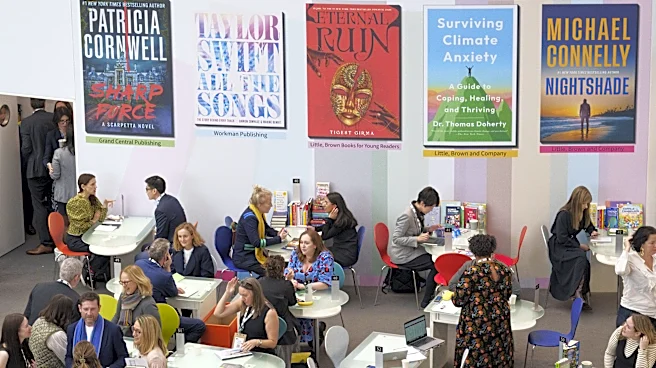
is a relationship-driven industry. The Guild suggests several strategies, including attending live events where agents are present, joining writing communities that facilitate author-agent interactions, and consuming agent interviews through various media. Writers are encouraged to engage thoughtfully on social media and in newsletters, attend conferences to make connections, and generally become active participants in the publishing conversation. The goal is to make the querying process more informed and personal, potentially leading to a better understanding of the industry and increased confidence for authors. The Guild notes that these connections do not guarantee representation but can make the process less daunting.
Why It's Important?
This guidance from the Authors Guild is significant for aspiring and established authors navigating the competitive publishing landscape. By focusing on relationship-building rather than just cold queries, the Guild highlights a strategic approach that can differentiate authors in a crowded market. For writers, understanding agents' preferences and industry insights through direct engagement can lead to more targeted and effective submissions, saving time and reducing frustration. For literary agents, more informed queries could streamline their review process, as authors who have done their homework are more likely to submit projects that align with their interests. This approach fosters a more collaborative environment within the publishing ecosystem, potentially leading to stronger author-agent partnerships and ultimately, more successful book projects reaching readers.
What's Next?
Writers are expected to integrate these relationship-building strategies into their pre-querying efforts. This could lead to increased participation in writing workshops, industry conferences, and online communities where agents are active. Literary agents might see a shift in the quality and personalization of queries they receive, as authors become more adept at tailoring their submissions based on prior interactions and research. The emphasis on genuine engagement rather than transactional pitching suggests a potential evolution in how authors and agents initially connect, moving towards more substantive and mutually beneficial interactions. This could also encourage more agents to participate in public forums and online discussions, recognizing the value of early engagement with potential clients.
Beyond the Headlines
The Authors Guild's advice points to a broader trend in professional networking, where authentic engagement and community participation are increasingly valued over purely transactional approaches. In the publishing world, this shift could help demystify the agent selection process and empower authors by providing actionable steps beyond simply perfecting a manuscript. It also underscores the evolving role of professional organizations like the Authors Guild in providing practical, real-world strategies for their members. This emphasis on building connections could foster a more inclusive and supportive literary community, where authors feel more connected to the industry rather than isolated in their writing process. Ultimately, it encourages a more holistic view of an author's career, where networking is an integral part of professional development.