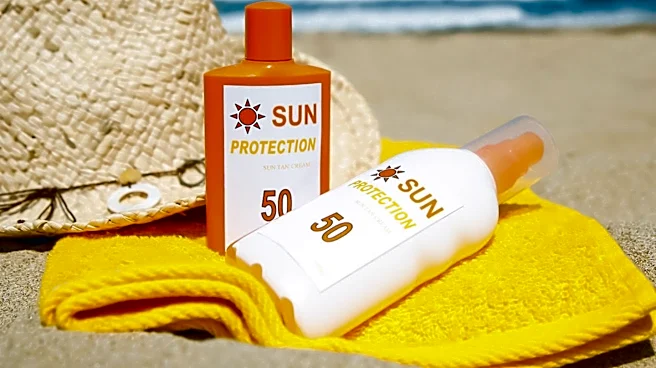










What's Happening?
Recent dermatology research emphasizes the critical role of daily SPF use in preventing premature aging and maintaining skin health. UVA rays, which are present year-round and penetrate deeper into the skin than UVB rays, are identified as significant
contributors to collagen breakdown, fine lines, and long-term structural aging. Unlike UVB rays, UVA rays are not significantly reduced by clouds or seasonal changes, making them a constant exposure risk. Health authorities, including the American Academy of Dermatology Association, recommend daily SPF use as a foundational step in skin protection strategies. This approach is supported by studies published in peer-reviewed medical databases, which highlight the cumulative impact of UV exposure on skin health. The research underscores that SPF is not just a seasonal precaution but a necessary daily habit to prevent long-term skin damage and reduce the risk of skin cancer.
Why It's Important?
The findings underscore the importance of shifting public perception from viewing SPF as a seasonal product to a daily necessity. Consistent use of sunscreen is associated with fewer fine lines, reduced pigmentation, and improved skin texture over time. This positions sunscreen as both a health and beauty tool, essential for preserving skin quality and structural integrity. The research also highlights the universal need for sun protection across all skin tones, as UV damage affects everyone, regardless of immediate risk perception. By promoting daily SPF use, the research aims to reduce the incidence of skin cancer, which remains one of the most common cancers globally. Public health statistics indicate that 1 in 5 Americans will develop skin cancer in their lifetime, emphasizing the need for preventive measures.
What's Next?
The research suggests a need for increased public health messaging to promote daily SPF use as part of a broader lifestyle strategy for long-term skin health. This includes educating the public on proper application techniques to ensure effective protection and encouraging the integration of SPF into daily routines. Health experts recommend a multi-layered approach to sun safety, combining sunscreen with other protective habits such as wearing hats, seeking shade, and limiting peak sun exposure. As awareness grows, it is expected that more individuals will adopt consistent sun protection practices, potentially leading to a decrease in UV-related skin damage and skin cancer cases.
Beyond the Headlines
The shift toward daily SPF use reflects a broader change in how people think about skincare and health. Modern dermatology and wellness culture emphasize prevention, consistency, and long-term protection rather than reacting to damage after it appears. This change in mindset is crucial for reducing the long-term health risks associated with UV exposure. Additionally, the research highlights the importance of formulation preference, as the most effective sunscreen is the one that fits seamlessly into a daily routine and encourages long-term use. This approach not only benefits individual skin health but also contributes to public health by reducing the overall burden of skin-related diseases.